Sleep Deprivation Effects on Running Style and Biomechanics

running-biomechanics sleep-deprivation sports-science injury-prevention

摘要

心智图封面图片
AI 生成的封面图片

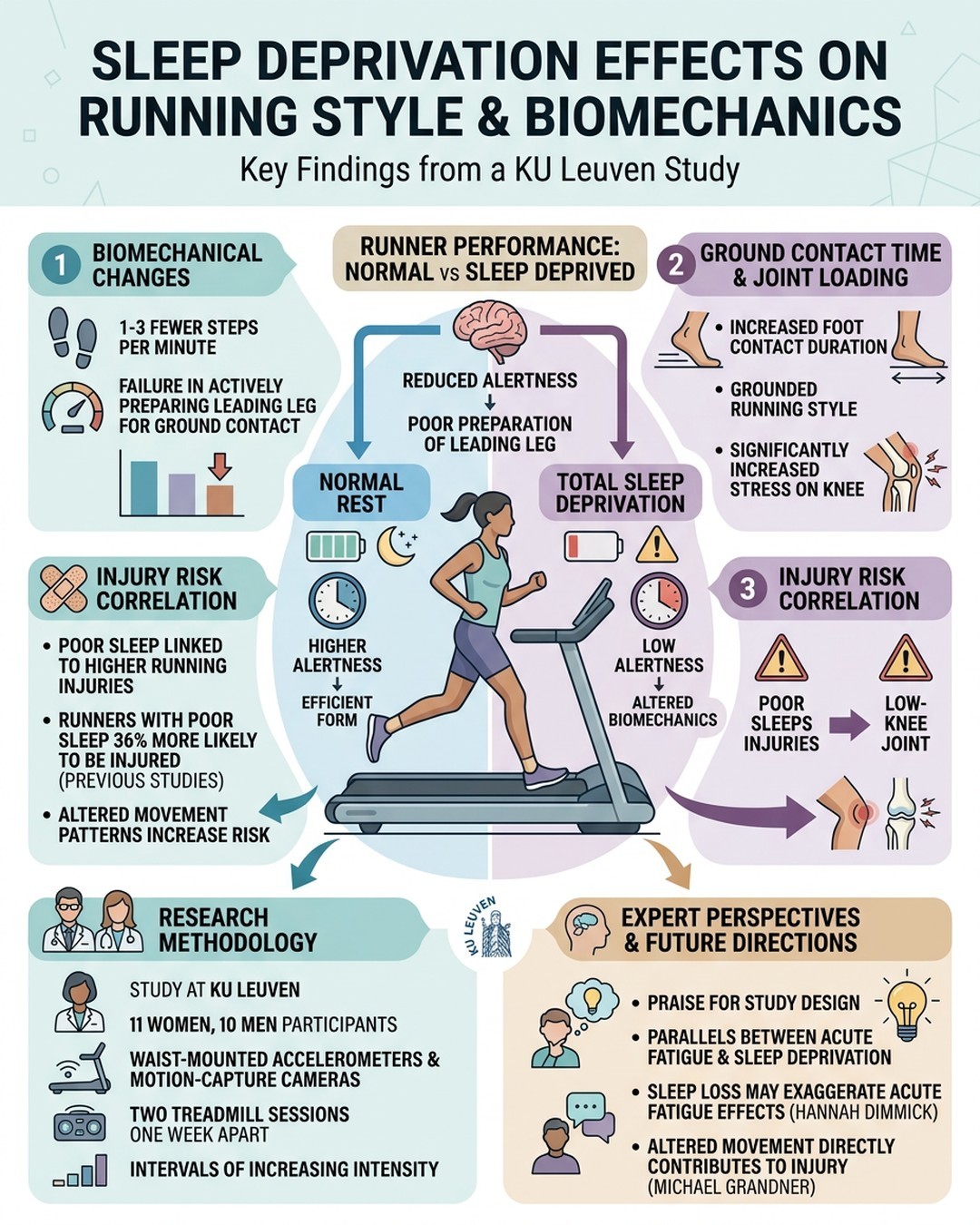
A recent study conducted by researcher Maura Seynaeve and her colleagues at KU Leuven in Belgium investigates how sleep deprivation alters running biomechanics, revealing that lack of sleep reduces alertness and changes physical movement during a treadmill run. The researchers analyzed 11 women and 10 men who performed two treadmill runs one week apart under conditions of total sleep deprivation and normal rest, utilizing waist-mounted accelerometers and motion-capture cameras to track physiological changes. The findings indicate that sleep-deprived runners take 1 to 3 fewer steps per minute at the same speed, experience increased ground contact time, and alter joint loading, which may elevate the risk of injuries such as knee problems. Athletes and fitness enthusiasts should prioritize adequate sleep recovery before high-intensity workouts and training sessions to maintain optimal biomechanical performance and reduce injury risks.

关键点

01

🔹 Biomechanical Changes From Sleep Deprivation

【📌 Key Finding】Sleep deprivation changes running biomechanics, causing runners to take 1 to 3 fewer steps per minute at the same speed. 【🔸 Impact Factors】Reduced alertness leads to failure in actively preparing the leading leg for ground contact. 【⭐ Data Support】Study participants included 11 women and 10 men monitored via waist-mounted accelerometers and motion-capture cameras.

02

🔸 Ground Contact Time And Joint Loading

【📌 Key Finding】Lack of sleep increases the duration of foot contact with the ground, leading to grounded running. 【🔸 Impact Factors】Altered movement loads specific joints differently, significantly increasing stress on the knee. 【⭐ Data Support】While grounded running can sometimes reduce certain joint loads, altered biomechanics from fatigue heighten overall injury risks.

03

⭐ Injury Risk Correlation

【📌 Key Finding】Poor sleep quality and total sleep deprivation are linked to a higher incidence of running injuries. 【🔸 Impact Factors】Previous studies show runners with poor sleep quality are 36 percent more likely to be injured. 【⭐ Data Support】Changes in load distribution across different body parts explain the heightened susceptibility to knee and joint injuries.

04

📊 Research Methodology And Design

【📌 Key Finding】Researchers at KU Leuven evaluated runners across two separate treadmill sessions conducted one week apart. 【🔸 Impact Factors】Volunteers performed intervals of increasing intensity based on pre-tested fitness levels. 【⭐ Data Support】One run followed total sleep deprivation, while the control run followed normal sleep patterns.

05

💡 Expert Perspectives And Future Directions

【📌 Key Finding】Experts praise the study design while noting parallels and differences between acute fatigue and sleep deprivation. 【🔸 Impact Factors】Hannah Dimmick from the University of Denver notes potential links between sleep loss and exaggerated acute fatigue effects. 【⭐ Data Support】Michael Grandner from the University of Arizona confirms that altered movement patterns directly contribute to injury induction.

想要创建自己的思维导图?

登录Neumap AI,开始创建专属于你的思维导图!

立即开始