Box Breathing Stress Control Technique

box-breathing stress-management mental-health breathwork neuroscience

摘要

心智图封面图片
AI 生成的封面图片

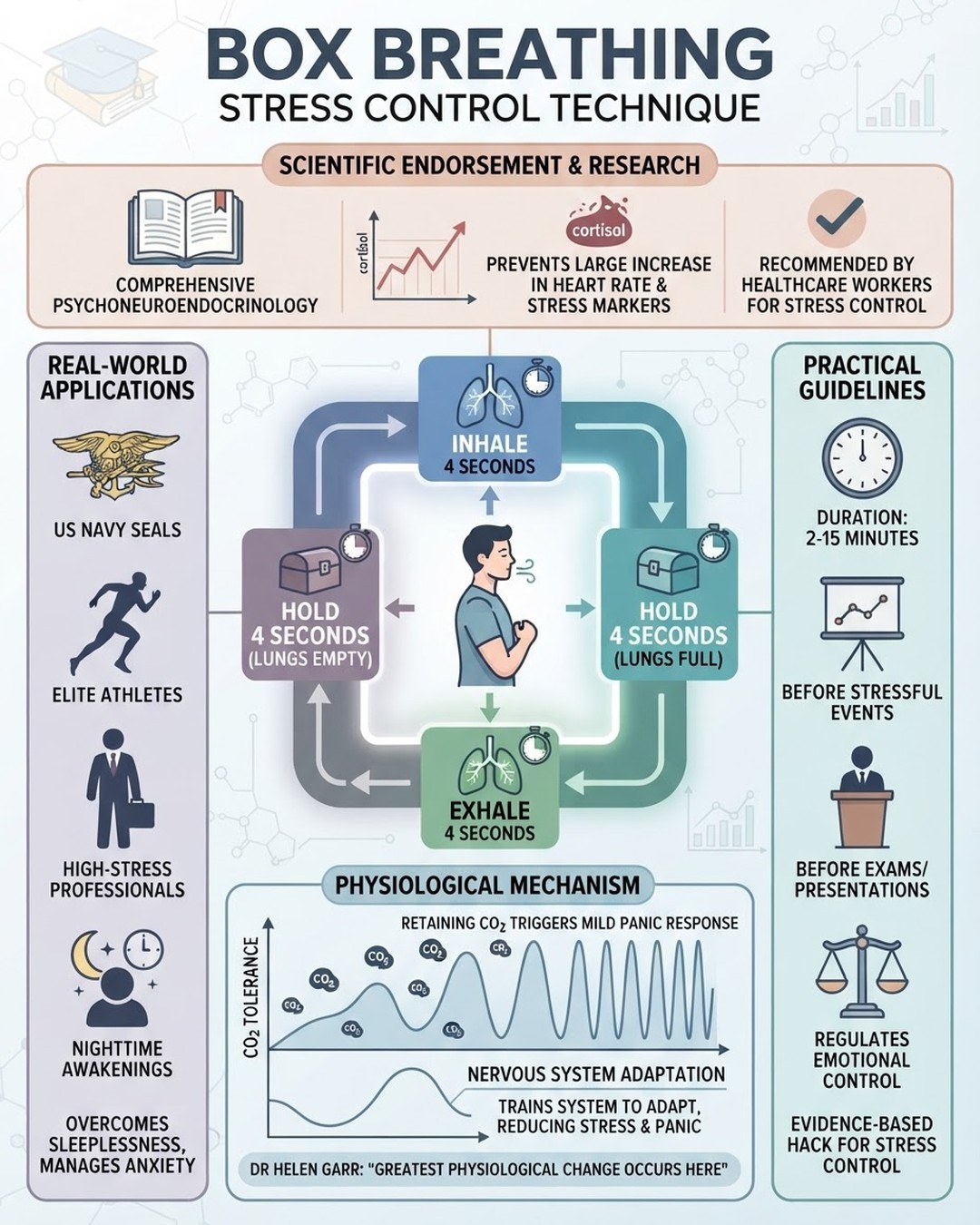
Box breathing is a powerful stress-relief technique that involves equal four-second intervals of inhaling, holding, exhaling, and holding again, designed to balance the nervous system and focus the mind. Originally derived from traditional practices like yoga and martial arts, the method has gained widespread modern adoption among high-pressure professionals, including US Navy Seals and elite athletes. The author highlights personal accounts from individuals like Maria Medina, who used the technique to combat sleeplessness caused by anxiety over earthquakes in Venezuela, and Brittany Lamm, who incorporates it into her daily morning routine and life coaching practice. These narratives illustrate how intentional breathwork helps practitioners regain emotional control and navigate overwhelming personal challenges. Scientific validation comes from a recent June study published in Comprehensive Psychoneuroendocrinology by researchers at Texas State University and the University of Toronto Mississauga, demonstrating that box breathing prevents large increases in heart rate and stress markers. Furthermore, GP Dr Helen Garr explains that the final breath-hold causes a deliberate accumulation of carbon dioxide, which trains the brain and body to better cope with panic and physiological stress responses. Practically, users can apply box breathing for anywhere from a few minutes to fifteen minutes before high-stress events, presentations, or when waking up anxious in the middle of the night. Medical professionals and coaches strongly recommend integrating this evidence-based tool into daily routines to actively manage nervous system reactions and improve overall mental resilience.

关键点

01

🔹 Core Technique Definition of Box Breathing

Box breathing consists of a four-step equal pattern: inhaling for four seconds, holding for four seconds, exhaling for four seconds, and holding again for four seconds before restarting the cycle. Breathwork coach Stuart Sandeman emphasizes that while the duration of the seconds can vary, all four phases must remain identical in length, which is why the method is named a box.

02

🔸 Physiological Mechanism and CO2 Tolerance

According to GP Dr Helen Garr, the final step of holding the breath after exhalation causes the greatest physiological change by retaining carbon dioxide (CO2). When the brain detects increased CO2 levels, it triggers a mild panic response; practicing box breathing trains the nervous system to adapt to these variations, thereby reducing overall feelings of panic and stress.

03

⭐ Scientific Research and Expert Endorsement

A North American study published in June in the journal Comprehensive Psychoneuroendocrinology by researchers at Texas State University and the University of Toronto Mississauga found that box breathing prevents large increases in heart rate and stress markers during high-pressure situations. Dr Helen Garr actively recommends it to healthcare workers and patients as an evidence-based hack for stress control.

04

📊 Real-World Applications by High-Performers

Box breathing is utilized by high-stress professionals and elite teams, including US Navy Seals entering hostile situations and the England football team. Individuals like program manager Maria Medina and life coach Brittany Lamm successfully use the technique to overcome sleeplessness, manage daily anxiety, and help coaching clients calm their nervous systems before discussing emotionally heavy topics.

05

💡 Practical Usage Guidelines and Flexibility

There is no fixed duration for box breathing; users can practice it anywhere from two to fifteen minutes depending on their needs. It is most effective when performed before stressful events, exams, or presentations, as well as during nighttime awakenings to quiet racing thoughts and regain a sense of emotional control.

想要创建自己的思维导图?

登录Neumap AI,开始创建专属于你的思维导图!

立即开始