James Webb Mysteriously Bright Galaxies Explanation

scitechdaily astronomy astrophysics cosmology james-webb-space-telescope

摘要

心智图封面图片
AI 生成的封面图片

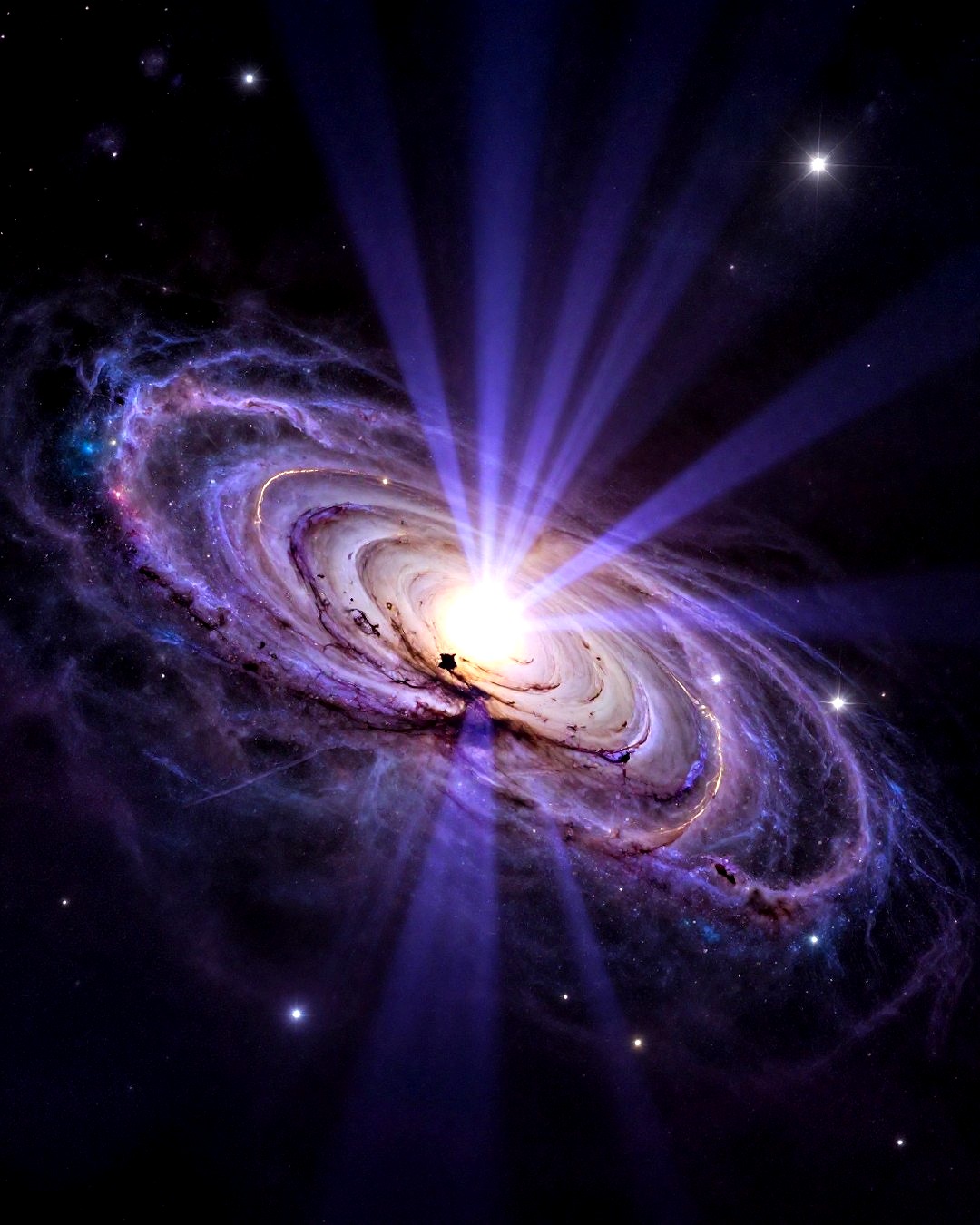
Recent astronomical analysis published on November 4, 2026, in The Astrophysical Journal explains that the unexpectedly bright galaxies observed by the James Webb Space Telescope in the early universe may be caused by powerful ultraviolet radiation clearing away gas and dust. Researchers Shyam Menon and Aaron Smith discovered that Lyman-alpha radiation exerts pressure which pushes low-density gas and dust outward, creating clear pathways for starlight to escape without requiring these galaxies to produce anomalous amounts of light. The authors emphasize that while dense star-forming regions remain anchored by gravity, less crowded spaces between stars experience explosive winds driven by hydrogen-reemitted ultraviolet light. This mechanism effectively removes the cosmic 'fog' that typically obscures distant starlight, offering a robust physical solution to a major cosmological puzzle regarding early galaxy evolution. The study utilized snapshots from a 2.5-million-year simulation to calculate radiation pressure dynamics, demonstrating that Lyman-alpha momentum transfer is a critical driver in reshaping stellar nurseries. These findings bridge the gap between theoretical radiation pressure models and observational astronomy data from the James Webb Space Telescope. Astronomers can utilize these insights to refine future three-dimensional cosmological simulations, incorporating dust properties and moving gas interactions to better interpret cosmic dawn phenomena. This research marks a significant step forward in understanding how light travels and escapes from the earliest galactic structures in our universe.

关键点

01

🔹 James Webb Space Telescope Bright Galaxies Discovery

【📌 Key Finding】The James Webb Space Telescope revealed that bright galaxies were far more common just a few hundred million years after the Big Bang than previously thought possible. 【🔸 Impact Factors】Astronomers initially debated whether these galaxies were producing unprecedented amounts of light or if observational biases were at play. 【⭐ Data Support】Published on November 4, 2026, in The Astrophysical Journal by researchers Shyam Menon and Aaron Smith.

02

🔸 Lyman-Alpha Radiation Pressure Mechanism

【📌 Key Finding】Powerful ultraviolet radiation known as Lyman-alpha radiation forms when electrons collide with hydrogen atoms or ions in star-forming regions. 【🔸 Impact Factors】Hydrogen atoms repeatedly absorb and re-emit Lyman-alpha photons at the same wavelength, amplifying the force exerted on surrounding material. 【⭐ Data Support】This momentum transfer creates intense outward pressure capable of pushing gas and dust away from stellar nurseries.

03

⭐ Density-Dependent Effects on Gas and Dust

【📌 Key Finding】Radiation pressure behaves differently depending on the local density of the surrounding material within early galaxies. 【🔸 Impact Factors】In dense regions, gravity remains strong enough to hold gas and dust in place, preserving star formation. In less crowded regions, radiation overcomes gravity to launch high-speed explosive winds. 【⭐ Data Support】Analysis of a 2.5-million-year simulation confirmed that low-density gas is swept clear out of the galaxy.

04

📊 Clearing the Cosmic Fog for Enhanced Visibility

【📌 Key Finding】The removal of loosely distributed gas and dust clears away the cosmic 'fog' obscuring early galactic structures. 【🔸 Impact Factors】By clearing these paths, starlight escapes much more efficiently, making distant galaxies appear unusually bright to telescopes without requiring excessive star generation. 【⭐ Data Support】This mechanism successfully resolves the mystery of unexpectedly bright galaxies during the cosmic dawn.

05

💡 Future Directions in Three-Dimensional Simulations

【📌 Key Finding】Current understanding relies on two-dimensional models and snapshot analyses due to the extreme computational challenge of tracking radiation-matter interactions. 【🔸 Impact Factors】Future research must account for early universe dust properties and moving gas dynamics simultaneously. 【⭐ Data Support】Researchers hope that improving computing power and algorithms will enable realistic three-dimensional simulations in the coming years.

想要创建自己的思维导图?

登录Neumap AI,开始创建专属于你的思维导图!

立即开始