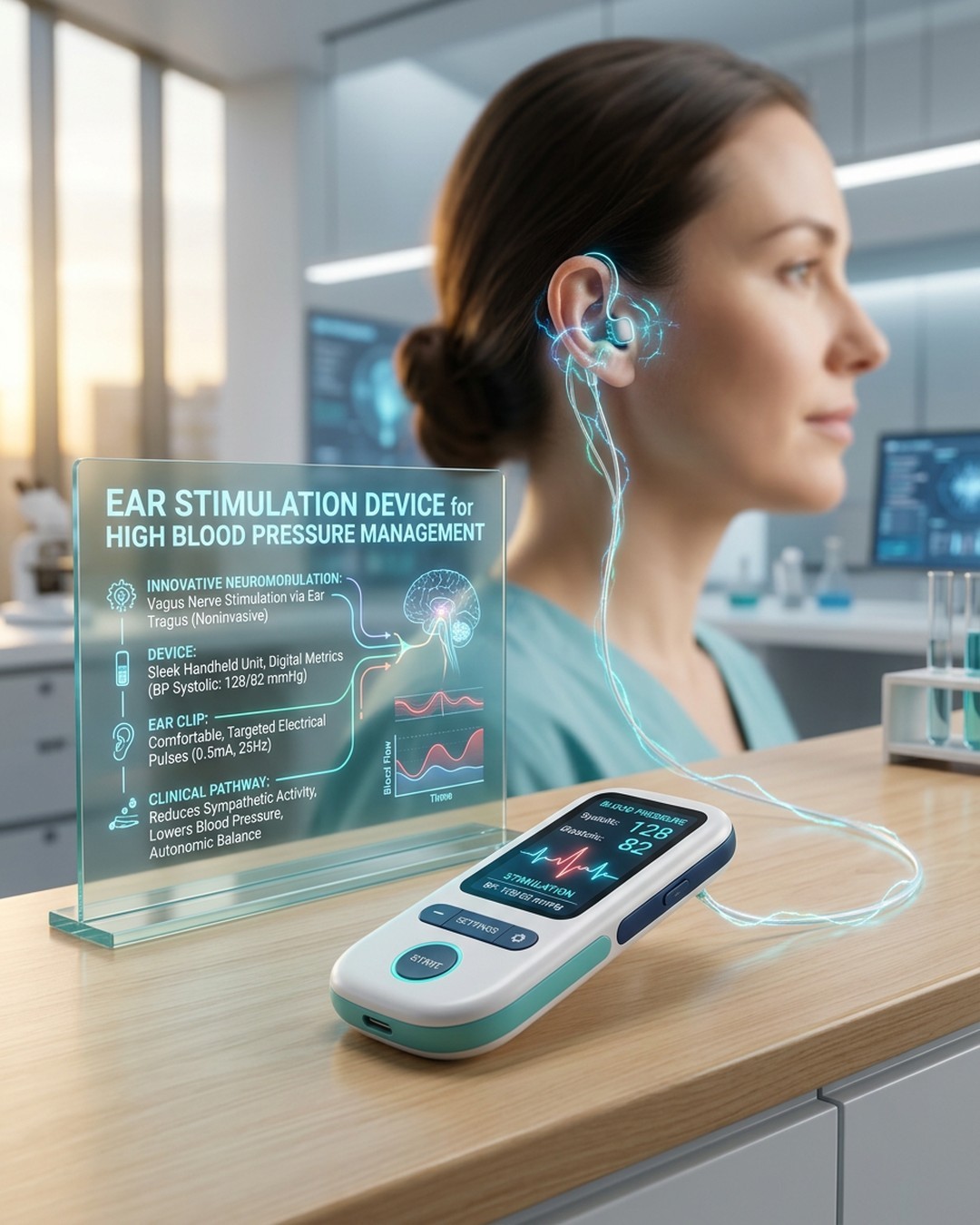
Ear Stimulation Device for High Blood Pressure Treatment

QueenMaryUniversityOfLondon Hypertension MedicalResearch Neuromodulation CardiovascularHealth

摘要

心智圖封面圖片
AI 生成的封面圖片

Researchers at Queen Mary University of London have investigated a noninvasive device that delivers electrical nerve stimulation through the ear to treat stubborn high blood pressure. Published on October 16, 2026 in the American Heart Association journal Hypertension, the NIHR-funded SCRATCH-HTN trial tested the handheld device on 63 participants whose hypertension remained uncontrolled despite medication. The trial aimed to evaluate whether transcutaneous autonomic neuromodulation (tAN) could safely and practically help lower blood pressure without invasive procedures. While active treatment did not achieve a statistically significant overall reduction compared to sham devices across the broader unselected group, pre-planned subgroup analyses revealed promising blood pressure reductions in participants who started with more severe hypertension. Developed by Afferent Medical Solutions, the handheld device delivers gentle electrical pulses through two clips attached to the tragus of the ear. Participants used the device for 30 minutes daily during the first two weeks and once weekly for the subsequent 10 weeks, demonstrating that the treatment was safe, well-tolerated, and practical for home administration. These findings establish a clear foundation for future larger-scale clinical trials targeting specific patient populations with severe hypertension. The research highlights the potential of noninvasive neuromodulation as a cheap, scalable solution for millions of patients struggling with uncontrolled blood pressure.

關鍵點

01

🔹 Clinical Trial Overview and Device Mechanism

Researchers at Queen Mary University of London evaluated a noninvasive transcutaneous autonomic neuromodulation (tAN) device developed by Afferent Medical Solutions. Published in Hypertension on October 16, 2026, the SCRATCH-HTN trial tested whether electrical nerve stimulation through the ear could help patients with uncontrolled high blood pressure. The handheld device delivers gentle electrical pulses via two clips attached to the tragus, allowing patients to self-administer treatments safely at home.

02

🔸 Study Participants and Treatment Protocol

The NIHR-funded SCRATCH-HTN trial included 63 participants whose hypertension remained uncontrolled despite taking one or more blood pressure medications. Participants were randomly assigned to active stimulation or a sham device, following a usage schedule of 30 minutes daily for the first two weeks, followed by once weekly sessions for another 10 weeks. The trial established that the treatment protocol was practical, safe, and well-tolerated by patients.

03

⭐ Subgroup Efficacy in Severe Hypertension

Across the entire unselected study population, active treatment did not produce a statistically significant greater blood pressure reduction than the sham device. However, a pre-planned subgroup analysis revealed a clear and larger blood pressure reduction among participants who began the trial with more severe hypertension, pointing toward targeted therapeutic benefits.

04

📊 Expert Insights and Future Research Directions

Dr. Ajay Gupta, chief investigator and clinical reader at Queen Mary University of London, noted that the technology is highly patient-acceptable and could offer a cheap, scalable solution for millions. Future research will involve larger, targeted clinical trials to verify these findings and determine precisely which patient groups benefit most from noninvasive neuromodulation for uncontrolled hypertension.

想要創建自己的心智圖?

登入Neumap AI,開始創建專屬於你的心智圖!

立即開始