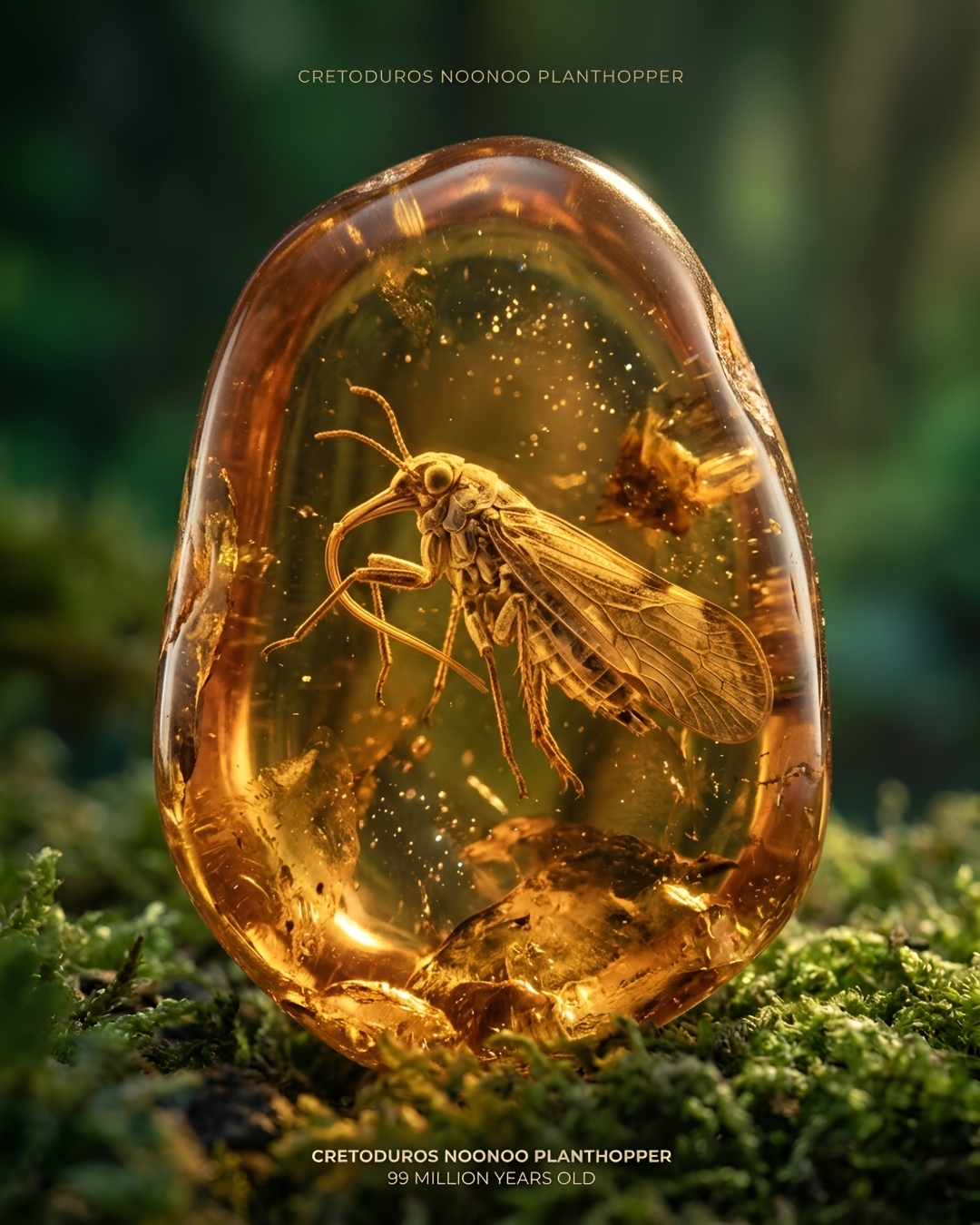
99-Million-Year-Old Insect Discovery

scitechdaily paleontology entomology cretaceous-period fossils tel-aviv-university

摘要

心智圖封面圖片
AI 生成的封面圖片

Scientists have discovered a 99-million-year-old ancient planthopper species named Cretoduros noonoo, preserved in Kachin amber from Myanmar. This insect features an exceptionally long, flexible mouthpart covered in crosswise folds, resembling a bendy drinking straw, which is an evolutionary adaptation completely unknown in any living planthopper species. Researchers Dolev Fabrikant, Dr. Leonidas-Romanos Davranoglou from Tel Aviv University, and Dr. Yanzhe Fu from the Chinese Academy of Sciences published these findings on July 28, 2026, in the journal Insects. The study suggests that the unique flexible organ allowed the insect to thread through narrow cracks in thick tree bark to feed on deep vascular sap during the Cretaceous period. The morphological analysis utilizing high-resolution micro-computed tomography revealed that the internal structure of the mouthparts was specifically built to bend without kinking or collapsing. Furthermore, two grooved lobes at the tip likely acted as anchors by expanding against the walls of bark cracks during the feeding process. The appearance of similar elongated structures across multiple unrelated insect groups during the Cretaceous implies that fire-prone ancient forests featured thick-barked trees that created distinct ecological pressures. This historical environment favored specialized feeding adaptations that are nearly absent among modern planthopper relatives today.

關鍵點

01

🔹 Discovery of Cretoduros Noonoo in Amber

Researchers discovered a 99-million-year-old ancient planthopper species named Cretoduros noonoo preserved in Kachin amber from Myanmar, as published on July 28, 2026, in the journal Insects by scientists from Tel Aviv University and the Chinese Academy of Sciences.

02

🔸 Unique Flexible Mouthparts Structure

The insect possesses mouthparts nearly twice the length of its body, densely covered with crosswise folds functioning like a bendy drinking straw or flexible hose, allowing the organ to bend without kinking or collapsing during feeding.

03

⭐ Specialized Sap-Feeding Mechanism

High-resolution micro-computed tomography revealed that the mouthparts were adapted to thread through narrow cracks in tree bark to reach deep vascular tissues, with two grooved lobes at the tip acting as expanding anchors during feeding.

04

📊 Cretaceous Ecological Context

The presence of similar elongated feeding structures across multiple unrelated insect groups during the Cretaceous period suggests that recurrent fires in ancient forests favored thick-barked trees, creating unique ecological opportunities that have since disappeared.

05

💡 Research Team and Implications

Conducted by Dolev Fabrikant, Dr. Leonidas-Romanos Davranoglou, and Dr. Yanzhe Fu, the discovery provides critical insights into ancient ecosystems, showing an evolutionary solution with almost no modern equivalent among living planthoppers.

想要創建自己的心智圖?

登入Neumap AI,開始創建專屬於你的心智圖!

立即開始