Jian changmaensis: Solving a 120-Million-Year-Old Fossil Mystery

paleontology dinosaurs evolution fossils FieldMuseum SciTechDaily

摘要

心智圖封面圖片
AI 生成的封面圖片

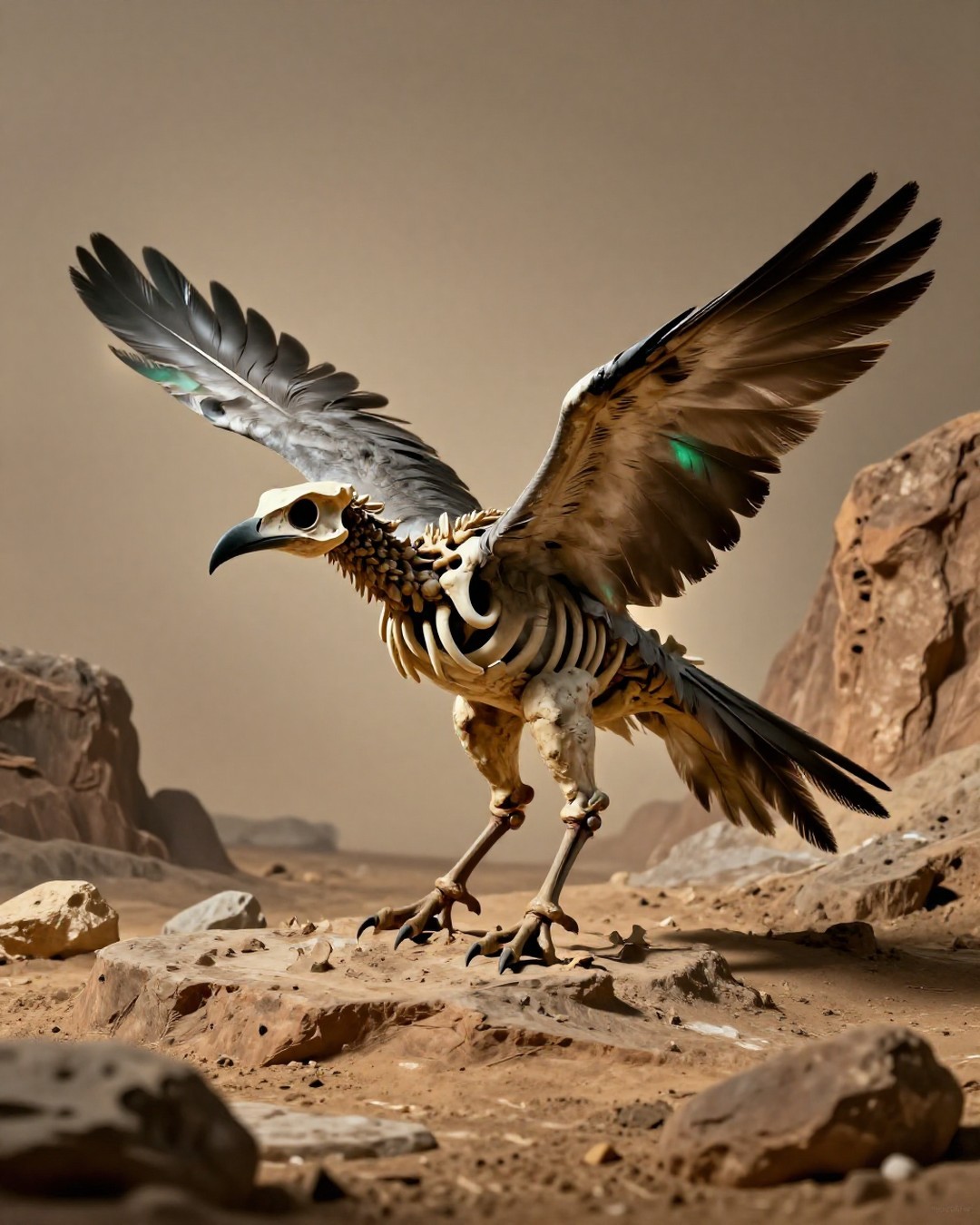
Paleontologists have identified a new species of feathered dinosaur, Jian changmaensis, which may resolve a 120-million-year-old mystery regarding fossilized bird remains found in the Changma Basin of northwestern China. The site is characterized by clusters of shattered bird bones resembling regurgitated pellets from modern birds of prey, yet the predator responsible had remained unidentified until now. The research team, led by experts from the Field Museum and Carnegie Museum of Natural History, posits that Jian changmaensis is the culprit. As a member of the microraptor subgroup of dromaeosaurs, this carnivore was significantly larger than the birds found at the site, making it the only non-avian dinosaur discovered in the region to date. Jian changmaensis likely possessed a four-foot wingspan and utilized long feathers on its arms and legs to glide, similar to a flying squirrel. This discovery provides critical ecological context for the Cretaceous period, illustrating the complex predator-prey relationships that existed alongside the ancestors of modern birds. This finding offers valuable insights into the evolutionary history of birds and their non-avian relatives. For researchers and enthusiasts, it underscores the importance of studying early ecosystems to understand the survival and success of modern avian species in the aftermath of the K-Pg extinction event.

關鍵點

01

🔹 Discovery of Jian changmaensis

Published in the Annals of Carnegie Museum on June 4, 2026, researchers identified Jian changmaensis, a new microraptor dinosaur. Found in the Xiagou Formation of the Changma Basin, China, it is the only non-avian carnivorous dinosaur recovered from a site otherwise dominated by over 100 bird fossils.

02

🔸 Solving the Fossil Mystery

The site contains clusters of shattered bird bones, which resemble regurgitated pellets from modern birds of prey. Scientists believe Jian changmaensis was the predator responsible for these remains, as it was significantly larger than the birds and the only carnivore identified in the area.

03

⭐ Physical Characteristics and Capabilities

Jian changmaensis was a dromaeosaur (feathered relative of Velociraptor) with an estimated four-foot wingspan. It likely possessed long feathers on both arms and legs, enabling it to glide through the air like a flying squirrel, though it was likely incapable of powered flight.

04

📊 Ecological Significance

The discovery provides a clearer picture of the Cretaceous ecosystem in the Changma Basin. By identifying the predator of early birds, researchers gain a better understanding of the evolutionary pressures and ecological context that shaped the ancestors of modern birds before the mass extinction 66 million years ago.

05

💡 Research Team and Context

The study was led by Jingmai O'Connor (Field Museum) and Matt Lamanna (Carnegie Museum of Natural History). The name Jian refers to a winged creature from Chinese mythology, while changmaensis denotes the location of the discovery in Gansu Province.

想要創建自己的心智圖?

登入Neumap AI,開始創建專屬於你的心智圖!

立即開始