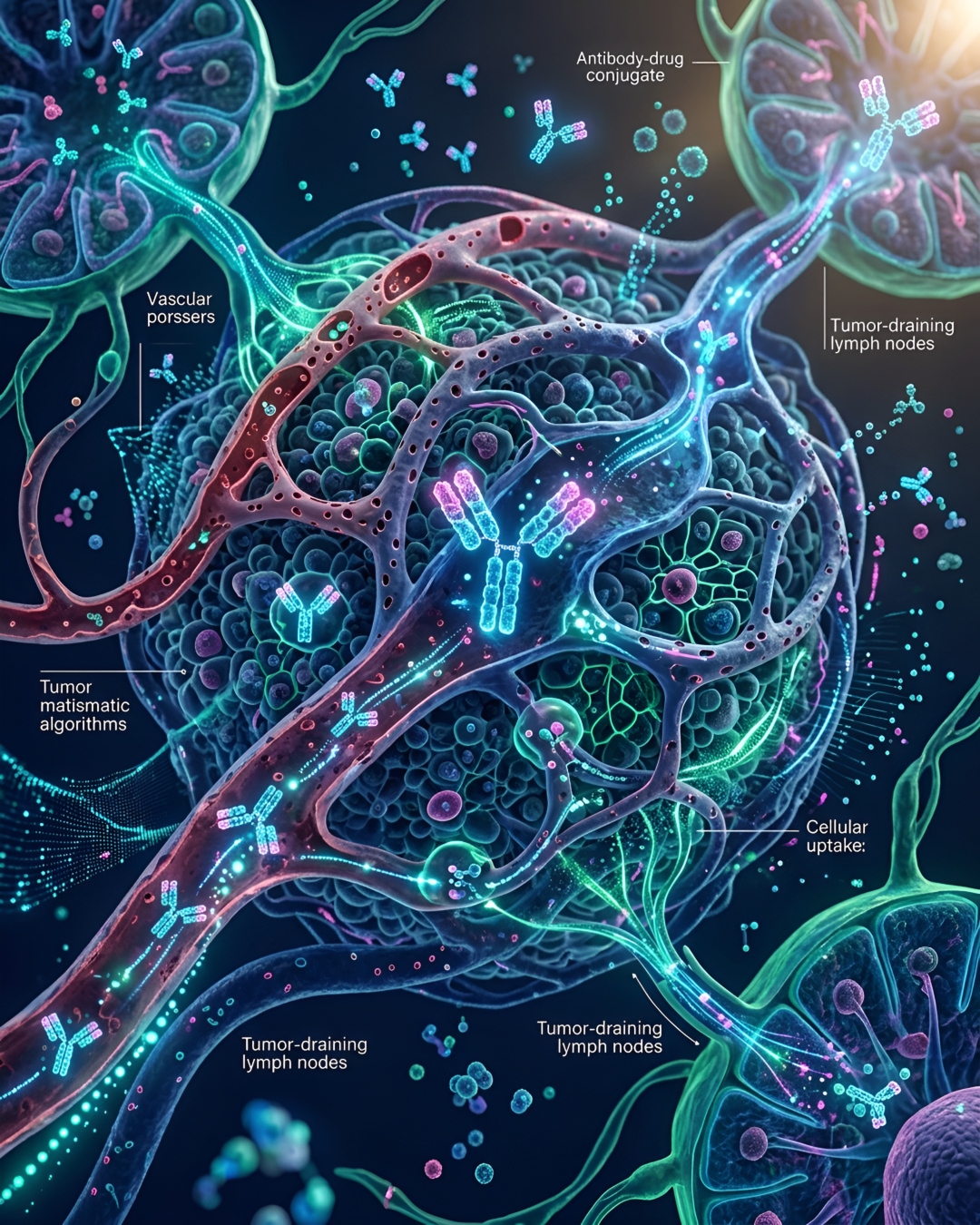
Mathematical Model of Tumor Microenvironment for IM-ADCs

cancer-research immunotherapy mathematical-modeling antibody-drug-conjugates tumor-microenvironment

摘要

心智圖封面圖片
AI 生成的封面圖片

Researchers from Mass General Brigham and the University of Cyprus developed a sophisticated mathematical model to analyze how the tumor microenvironment impacts the delivery and efficacy of immunomodulatory antibody-drug conjugates (IM-ADCs). The research team, led by Dr. Rakesh Jain, utilized the model to evaluate the experimental therapy HE-S2, which merges an anti-PD-L1 antibody with the immune-stimulating payload D18, discovering that the combination significantly outperforms its individual components. The mechanistic model revealed a critical positive feedback loop where tumor shrinkage reduces elevated interstitial fluid pressure, thereby facilitating improved drug transport and amplifying overall therapeutic effectiveness. The findings indicate that pre-treatment strategies focusing on normalizing tumor blood vessels must carefully balance vascular function improvements while maintaining adequate pore sizes of at least 40 nanometers to allow large molecule penetration.

關鍵點

01

🔹 Mathematical Model Development

Researchers from Mass General Brigham and the University of Cyprus created a mathematical model led by Dr. Rakesh Jain to study the tumor microenvironment. The model incorporates abnormal blood vessels, elevated interstitial fluid pressure, immune cell activity, drug transport, and tumor-draining lymph nodes.

02

🔸 Evaluation of HE-S2 Therapy

The team assessed HE-S2, an experimental immunomodulatory antibody-drug conjugate combining an anti-PD-L1 antibody with a D18 immune-stimulating payload. By fitting the model to published mouse studies, researchers successfully reproduced observed tumor responses and explored complex biological processes.

03

⭐ Synergistic Effects and Feedback Loop

The modeling demonstrated that HE-S2 is more effective as a combined treatment than its separate individual components. Furthermore, it identified a positive feedback loop: tumor reduction decreases interstitial fluid pressure, which subsequently enhances drug delivery and treatment efficacy.

04

📊 Vascular Normalization and Pore Size Requirements

Because antibody-drug conjugates are large molecule therapeutics, they require vascular pores of at least 40 nanometers in size to reach their targets. Overly aggressive vascular normalization can reduce permeability, highlighting the need for balanced pre-treatment normalization strategies.

05

💡 Publication and Reference Details

The study was published in the Journal for ImmunoTherapy of Cancer in 2026 by lead author C. Harkos and colleagues. The research paper is referenced with DOI: 10.1136/jitc-2026-015357.

想要創建自己的心智圖?

登入Neumap AI,開始創建專屬於你的心智圖!

立即開始