Cellular Signal Explains Congenital Heart Defects

SciTechDaily UniversityOfCopenhagen CellBiology Genetics CongenitalHeartDisease EmbryonicDevelopment PrimaryCilium PLOSBiology

摘要

心智圖封面圖片
AI 生成的封面圖片

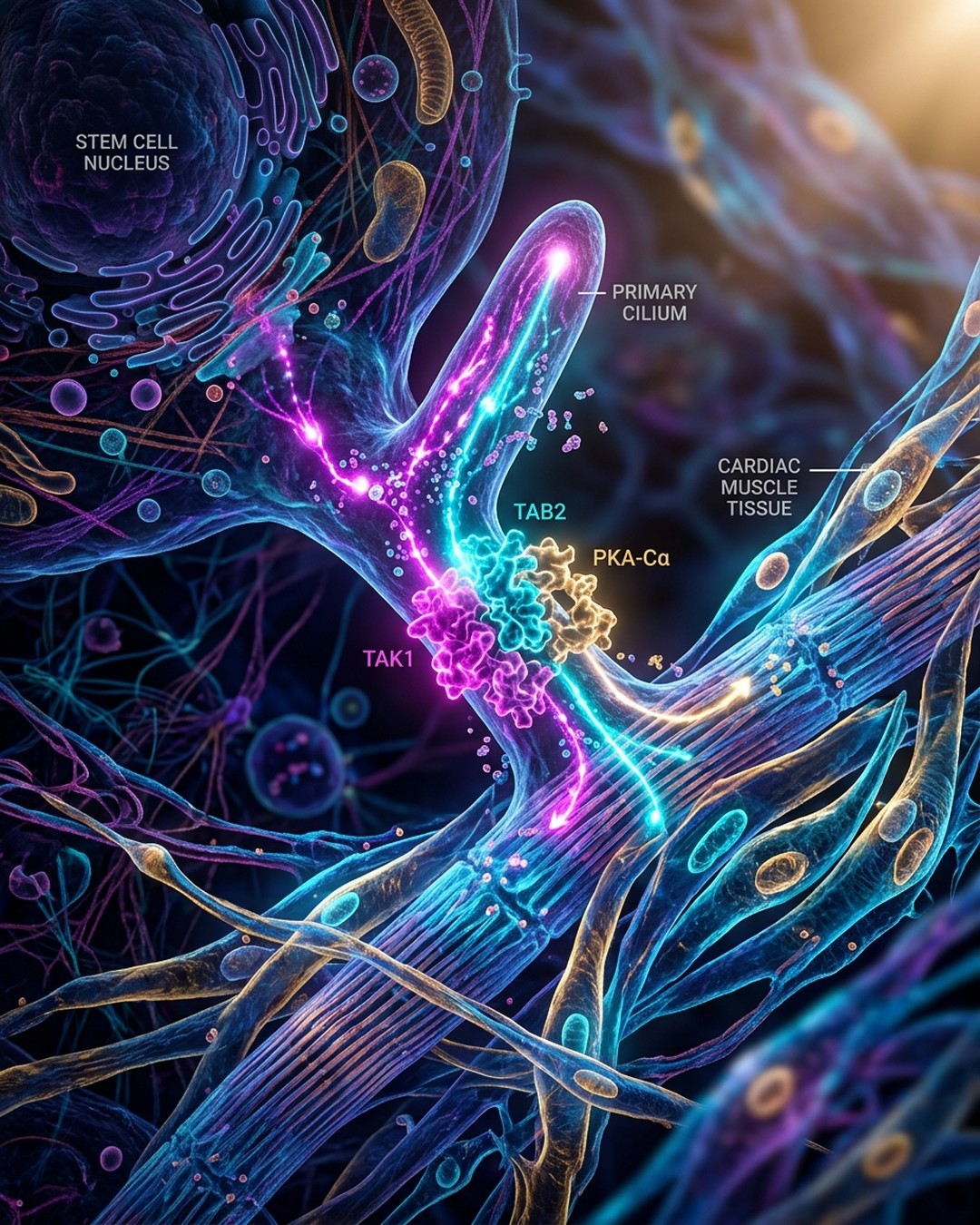
On August 8, 2026, researchers at the University of Copenhagen published a groundbreaking study in PLOS Biology revealing a previously unknown communication mechanism inside the primary cilium, the microscopic cellular antenna guiding embryonic development. Approximately 2 out of every 100 babies worldwide are born with congenital heart disease, but the exact biological processes have remained largely unclear until now. Led by experts Lars Allan Larsen and Søren Tvorup Christensen, the research team discovered that three specific proteins—TAK1, TAB2, and PKA-Ca—form a vital signaling center within this cellular antenna that instructs stem cells on how to develop into heart muscle cells. The researchers combined human patient genetic data with rigorous experiments involving zebrafish, human cells, and mouse stem cells to validate their findings. By examining genetic information from thousands of individuals with congenital heart defects, the team identified rare mutations that disrupt this ciliary communication pathway. When these mutated genes were engineered into zebrafish models, they directly caused developmental abnormalities and impaired heart function, thereby confirming the biological pathway's critical role in human physiology. A crucial insight from the study is that disruptions in this ciliary signaling mechanism do not merely affect the heart but frequently extend to multiple organs. This multi-organ impact explains why many patients with syndromic congenital heart disease also suffer from associated abnormalities in the brain, kidneys, and skeleton. The discovery bridges a major knowledge gap in developmental biology, offering a unifying explanation for numerous rare genetic diseases linked to faulty primary cilia. This newfound cellular understanding holds immense promise for early clinical diagnosis and targeted therapeutic interventions. By clarifying how antenna defects lead to complex congenital malformations, medical science moves closer to identifying vulnerable patients early in life and developing specialized treatments. Ultimately, this research transforms our comprehension of embryonic malformations and paves the way for advanced regenerative and genetic medicine applications.

關鍵點

01

🔹 Discovery of Cellular Antenna Signaling Mechanism

On August 8, 2026, University of Copenhagen researchers published a study in PLOS Biology revealing a communication system inside the primary cilium. The primary cilium acts as a microscopic cellular antenna that guides embryonic development by interpreting signaling molecules to help cells decide whether to divide, move, or die. This discovery changes our understanding of how congenital heart defects arise, identifying an essential mechanism in cellular development.

02

🔸 Three Proteins Governing Heart Formation

Researchers identified three specific proteins—TAK1, TAB2, and PKA-Ca—that form a specialized signaling center inside the primary cilium. These proteins function as molecular instructions directing stem cells on when and how to properly develop into heart muscle cells. Genetic alterations can disrupt this critical communication, resulting in antenna defects that lead directly to congenital heart disease.

03

⭐ Multidisciplinary Experimental Validation

To prove the mechanism, scientists integrated human patient genetic data from thousands of individuals with congenital heart defects alongside experiments using zebrafish, human cells, and mouse stem cells. Engineered zebrafish models carrying these rare patient mutations exhibited severe developmental abnormalities and impaired heart function, successfully bridging human genetic data with observable physiological outcomes.

04

📊 Multi-Organ Impact and Syndromic Connections

The study revealed that ciliary signaling failures affect more than just cardiac tissue, extending to multiple organ systems during embryonic development. This discovery provides a unifying biological explanation for syndromic congenital heart disease, where patients simultaneously experience structural defects and related conditions in the brain, kidneys, and skeleton.

05

💡 Clinical Implications for Rare Genetic Diseases

The identification of faulty primary cilia mechanisms opens new pathways for medical science to improve diagnostic capabilities for rare genetic conditions. By understanding the precise molecular pathways involved, clinicians may eventually be able to identify vulnerable patients much earlier and develop targeted treatments for various ciliopathies.

想要創建自己的心智圖?

登入Neumap AI,開始創建專屬於你的心智圖!

立即開始