Age-Related Muscle Weakness and Neuromuscular Junction Failure

scitechdaily aging neuroscience biotechnology muscle-health

摘要

心智圖封面圖片
AI 生成的封面圖片

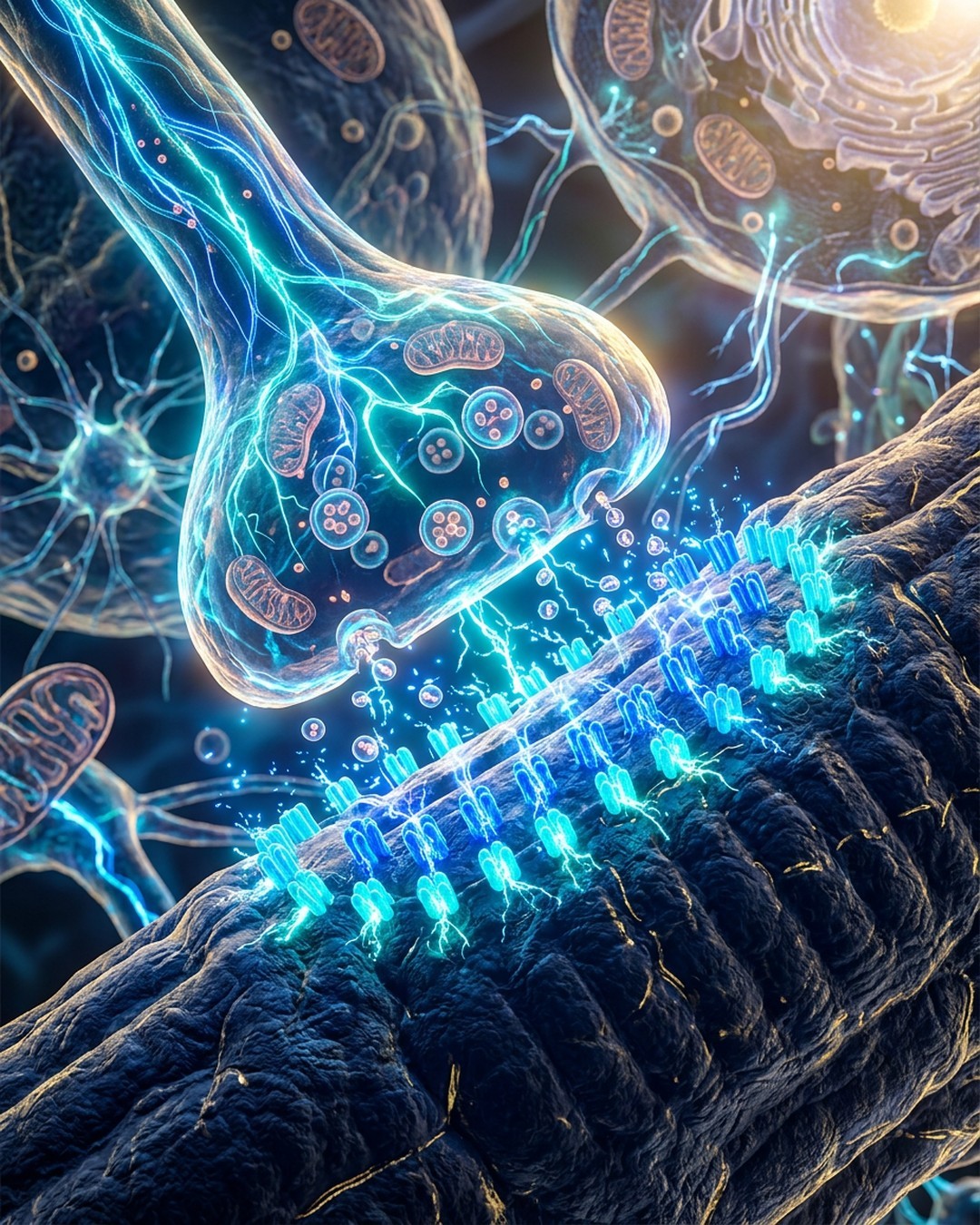
Published on October 4, 2026, researchers at the University of Missouri-Columbia published a breakthrough study in The Journal of Clinical Investigation on September 1, 2026, revealing that age-related muscle weakness is not solely caused by muscle mass loss or motor neuron decline. Instead, a critical failure occurs at the neuromuscular junction where electrical signals are transmitted from nerves to muscle fibers. Led by W. David Arnold and international collaborators, the research identifies that aging muscles experience lower levels of NaV1.4, a vital sodium channel responsible for generating the electrical activity needed for muscle contraction. This reduction makes muscle fibers less responsive to nerve signals, contributing significantly to sarcopenia, a condition affecting nearly half of adults over age 80. To address this physiological bottleneck, the scientific team collaborated with Danish biotechnology company NMD Pharma to target ClC-1, a chloride channel that regulates electrical activity in skeletal muscle. By partially inhibiting ClC-1 using an experimental drug called ignaseclant, the researchers successfully restored muscle responsiveness to nerve signals and improved muscle strength in animal models. Ignaseclant has already undergone human clinical trials for neuromuscular disorders such as Charcot-Marie-Tooth disease, demonstrating positive results in muscle strength and function. This foundational discovery opens a promising therapeutic pathway for treating sarcopenia in older adults, shifting the medical focus toward restoring neuromuscular communication.

關鍵點

01

🔹 Breakdown in Neuromuscular Junction Communication

【📌 Key Finding】Research from the University of Missouri-Columbia published on September 1, 2026, shows that muscles do not weaken solely due to size reduction or motor neuron loss. 【🔸 Impact Factors】Communication reliability drops significantly at the neuromuscular junction where nerve signals activate muscles, affecting nearly half of adults over age 80 experiencing sarcopenia. 【⭐ Data Support】Published in The Journal of Clinical Investigation with findings demonstrated across both human studies and animal models.

02

🔸 Role of the NaV1.4 Sodium Channel in Aging

【📌 Key Finding】Scientists linked part of the age-related muscle signaling decline to lower levels of NaV1.4. 【🔸 Impact Factors】NaV1.4 is a crucial sodium channel that helps skeletal muscle generate the electrical activity required for contraction. 【⭐ Data Support】Lower channel expression renders muscle fibers less responsive to arriving nerve signals, explaining why aging muscles fail to activate effectively.

03

⭐ Therapeutic Potential of ClC-1 Inhibition

【📌 Key Finding】Researchers investigated ClC-1, a chloride channel involved in regulating skeletal muscle electrical activity. 【🔸 Impact Factors】Working with Danish biotechnology company NMD Pharma, scientists found that partially inhibiting ClC-1 makes aging muscles more responsive. 【⭐ Data Support】Testing in animal models successfully improved muscle strength by targeting this specific protein pathway.

04

📊 Clinical Application of Ignaseclant

【📌 Key Finding】NMD Pharma developed ignaseclant, an experimental drug that partially inhibits ClC-1. 【🔸 Impact Factors】The drug has already been evaluated in multicenter clinical trials for Charcot-Marie-Tooth disease, the most common inherited neuromuscular disorder. 【⭐ Data Support】Lead investigator W. David Arnold presented topline findings at the 2026 Muscular Dystrophy Association Clinical and Scientific Conference, showing improvements across several functional measures.

05

💡 Future Path to Treating Sarcopenia

【📌 Key Finding】Understanding the root biological causes of sarcopenia provides a clear foundation for future treatments. 【🔸 Impact Factors】Making a drug widely available to older adults requires first mapping out the precise points of neural and muscular failure. 【⭐ Data Support】This discovery bridges fundamental neuroscience and clinical biotechnology, establishing a viable roadmap toward human trials for age-related muscle weakness.

想要創建自己的心智圖?

登入Neumap AI,開始創建專屬於你的心智圖!

立即開始