Scientists Trap Single Antimatter Particle for Months

antimatter northwestern-university particle-physics quantum-physics physics

摘要

心智圖封面圖片
AI 生成的封面圖片

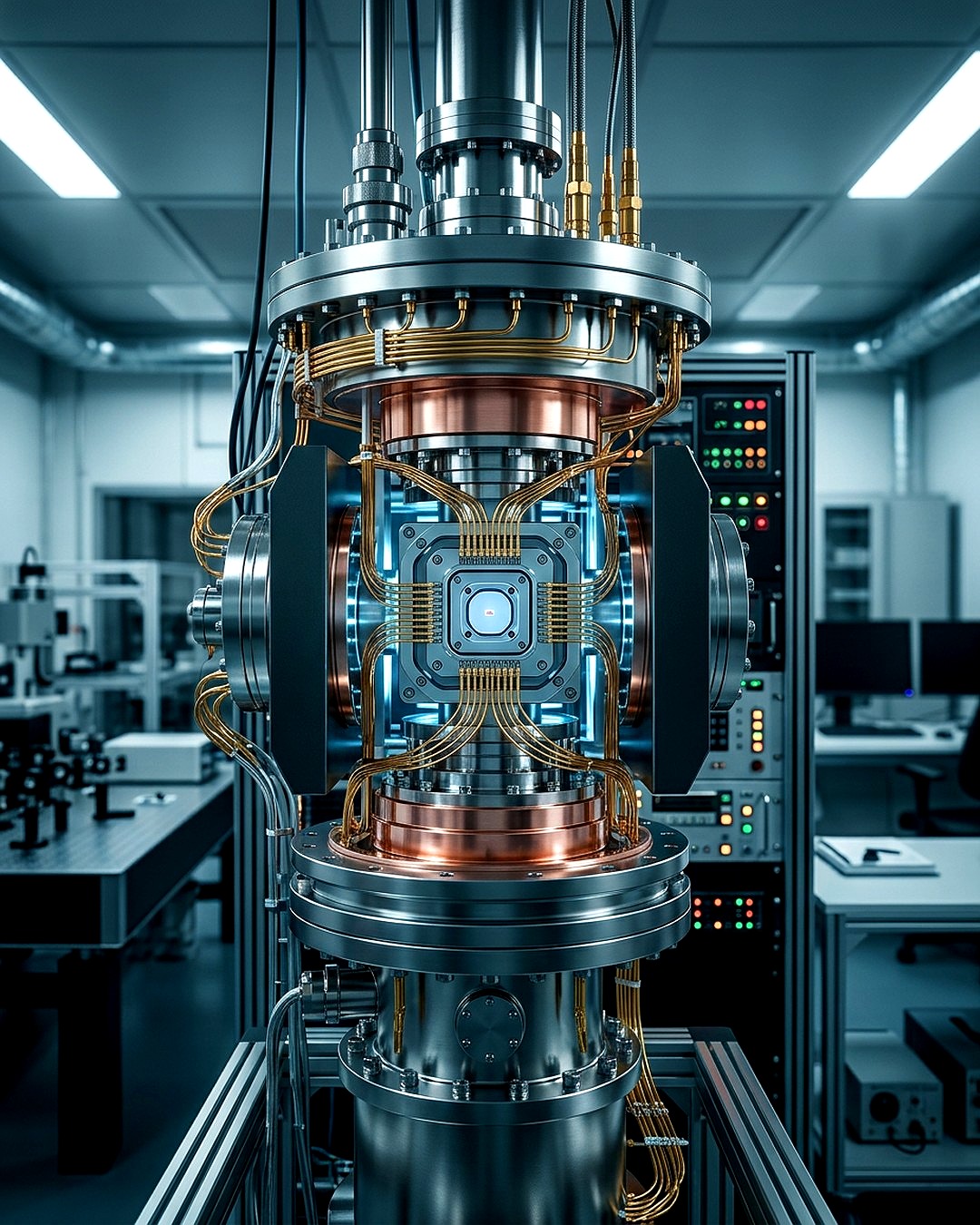
Northwestern University physicists have achieved unprecedented quantum control over a single positron, capturing the antimatter particle from sodium-22 radioactive decay and suspending it in a near-perfect vacuum for months on November 12, 2026. This breakthrough establishes a one-positron quantum cyclotron, cooling the energetic particle to approximately 300 millikelvins, which is 0.3 degrees Celsius above absolute zero, allowing researchers to observe and manipulate individual quantum energy states. The study leader Gerald Gabrielse and his research team aim to use this precise confinement to compare the magnetic properties of positrons and electrons with extreme accuracy. By testing whether their magnetic moments are equal in magnitude, the team hopes to uncover potential flaws in the Standard Model of particle physics and investigate why the universe contains overwhelmingly more matter than antimatter. The experiment overcomes the fundamental challenge of matter-antimatter annihilation by utilizing specialized electric and magnetic fields to keep the positron isolated from physical container walls. This isolation prevents destructive contact with ordinary matter, enabling long-term observation and measurement of fundamental particle characteristics that could resolve one of physics' greatest mysteries. This milestone bridges decades of research on electron magnetic moments and low-energy antiprotons, opening new experimental pathways for testing fundamental physical symmetries. Researchers plan to leverage these ultra-precise magnetic measurements to search for unambiguous evidence of physics beyond the Standard Model.

關鍵點

01

🔹 Quantum Control Breakthrough

【📌 Key Finding】Physicists at Northwestern University successfully suspended a single positron, the antimatter counterpart of the electron, in a near-perfect vacuum for months. 【🔸 Impact Factors】This achievement creates a one-positron quantum cyclotron, enabling researchers to bring the energetic particle into a precisely controlled quantum state for the first time. 【⭐ Data Support】The experiment was published on November 12, 2026, in Physical Review Letters, following foundational work extracting positrons from sodium-22 radioactive decay.

02

🔸 Extreme Cooling and Confinement

【📌 Key Finding】Researchers cooled the captured positron to approximately 300 millikelvins, reaching just 0.3 degrees Celsius above absolute zero. 【🔸 Impact Factors】This extreme cooling allows the positron to settle into its lowest quantum ground state regarding its cyclotron motion. 【⭐ Data Support】Specialized electric and magnetic fields suspend the particle away from container walls, preventing matter-antimatter annihilation and allowing months-long confinement.

03

⭐ Investigating Matter-Antimatter Imbalance

【📌 Key Finding】The research directly addresses the mystery of why the Big Bang did not leave behind equal amounts of matter and antimatter that would have mutually annihilated. 【🔸 Impact Factors】Current physics theories cannot adequately explain why the observable universe consists overwhelmingly of matter, indicating a major loophole or failure in the Standard Model. 【⭐ Data Support】Study leader Gerald Gabrielse notes that finding any mismatch between electron and positron properties would represent the biggest physics discovery of the last century.

04

📊 Precise Magnetic Moment Measurement

【📌 Key Finding】The ultimate goal of the trapped positron experiment is to measure its magnetic moment with extreme precision and compare it directly to an electron. 【🔸 Impact Factors】Previous work by the team measured electron magnetic moments to an accuracy of one part in 10 trillion. 【⭐ Data Support】Theory predicts that positrons and electrons should possess magnetic moments equal in magnitude but opposite in direction; any deviation would challenge foundational physics laws.

05

💡 Methodology and Future Implications

【📌 Key Finding】The experiment utilizes carefully tuned microwaves to deliver tiny amounts of energy, triggering and detecting transitions between individual quantum states. 【🔸 Impact Factors】This methodology merges prior techniques developed for isolating electrons with pioneering work on capturing and cooling antiprotons. 【⭐ Data Support】Funding for this groundbreaking study was provided by the U.S. National Science Foundation, advancing low-energy antimatter research.

想要創建自己的心智圖?

登入Neumap AI,開始創建專屬於你的心智圖!

立即開始