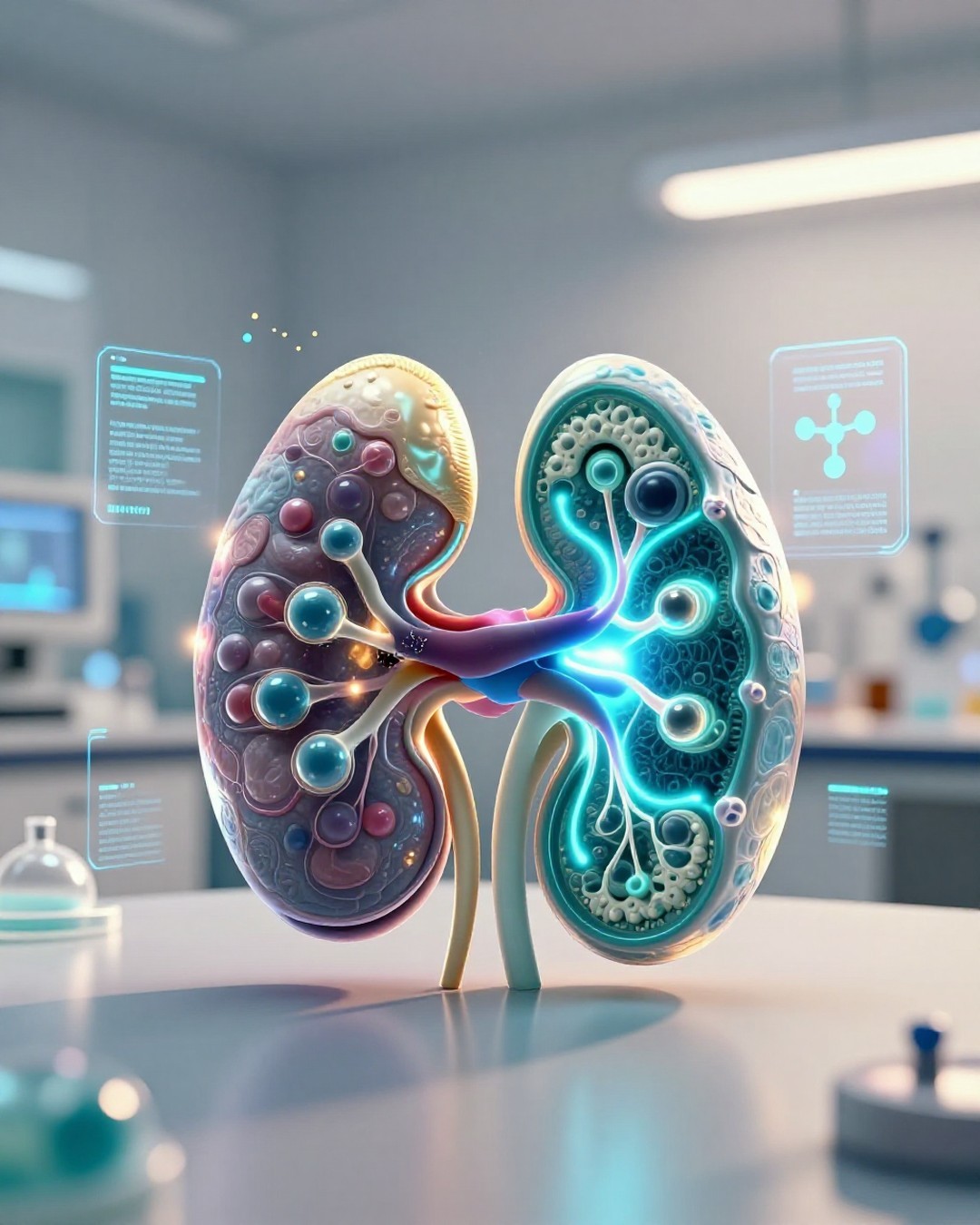
UCLA Research on Kidney Regeneration via ENPP1 Blockade

UCLA RegenerativeMedicine KidneyHealth Biotechnology AD-NP1 ENPP1 MedicalResearch

摘要

心智圖封面圖片
AI 生成的封面圖片

Researchers at UCLA have identified that the protein ENPP1 acts as a significant barrier to kidney regeneration by disrupting cellular energy production and metabolic processes following injury. By blocking this protein, scientists have demonstrated a potential pathway to accelerate tissue repair and reduce scarring in damaged kidneys, offering a promising therapeutic strategy for chronic kidney disease. The study, led by cardiovascular scientist Arjun Deb and published on June 24, 2026, in Cell Stem Cell, highlights the efficacy of a monoclonal antibody drug named AD-NP1. Originally developed for heart tissue regeneration, AD-NP1 has shown success in mouse models by inhibiting the metabolic signals that prevent effective kidney cell proliferation and healing. The research team utilized both genetic models and pharmacological interventions to confirm that suppressing ENPP1 leads to improved kidney function, as evidenced by lower levels of serum creatinine, BUN, and cystatin C. This discovery bridges the gap between cardiac and renal regenerative medicine, suggesting a shared molecular mechanism for organ recovery. With AD-NP1 already approved by the FDA for Phase 1 clinical trials in heart disease, the researchers are now pursuing approval for kidney-specific trials. This development represents a significant step toward clinical applications for organ repair, potentially transforming treatment protocols for patients suffering from acute and chronic kidney injuries.

關鍵點

01

🔹 The Role of ENPP1 in Kidney Injury

【📌 Key Finding】The protein ENPP1 is identified as a primary inhibitor of kidney regeneration. 【🔸 Impact Factors】Following injury, the kidney produces excess ENPP1, which triggers a metabolic chain reaction that disrupts energy production and prevents healthy cells from proliferating. 【⭐ Data Support】Research indicates that blocking ENPP1 reduces scar tissue formation and significantly improves overall kidney function in mouse models.

02

🔸 AD-NP1: A Dual-Purpose Therapeutic

【📌 Mechanism】AD-NP1 is a lab-engineered monoclonal antibody designed to target and disable human ENPP1. 【⭐ Development】Originally developed at UCLA to assist heart tissue repair after myocardial infarction, the drug has now been proven effective in accelerating kidney healing. 【📊 Clinical Status】The FDA approved AD-NP1 in September for Phase 1 clinical trials focusing on heart disease, with future plans to expand testing to kidney injury patients.

03

⭐ Experimental Evidence and Methodology

【🧪 Study Design】Researchers compared normal mice with mice genetically unable to produce ENPP1 after inducing kidney damage via a toxic diet and drugs. 【📊 Key Metrics】Blood tests monitored markers of dysfunction including serum creatinine, BUN, and cystatin C. 【📈 Results】After four weeks, mice lacking ENPP1 showed significantly lower levels of these markers compared to control groups, confirming enhanced recovery.

04

📊 Comparative Healing Outcomes

【🔵 Control Group】Exhibited persistent high levels of kidney dysfunction markers and increased scarring after injury. 【🟠 Treated Group】Mice treated with AD-NP1 showed improved kidney function within seven days, characterized by higher rates of cell proliferation and reduced fibrosis. 【⚖️ Key Differences】The treated group demonstrated a clear ability to overcome the metabolic signals that typically stall the natural repair process.

05

💡 Future Clinical Implications

【🎯 Strategic Goal】The research aims to translate findings from mouse models to human clinical trials. 【🏛️ Institutional Support】The study was funded by the National Institutes of Health (NIH), the California Institute of Regenerative Medicine, and the Department of Defense. 【🚀 Next Steps】Professor Arjun Deb is actively seeking regulatory approval to initiate human trials specifically for kidney repair, potentially offering a new standard of care for chronic kidney disease.

想要創建自己的心智圖?

登入Neumap AI,開始創建專屬於你的心智圖!

立即開始