
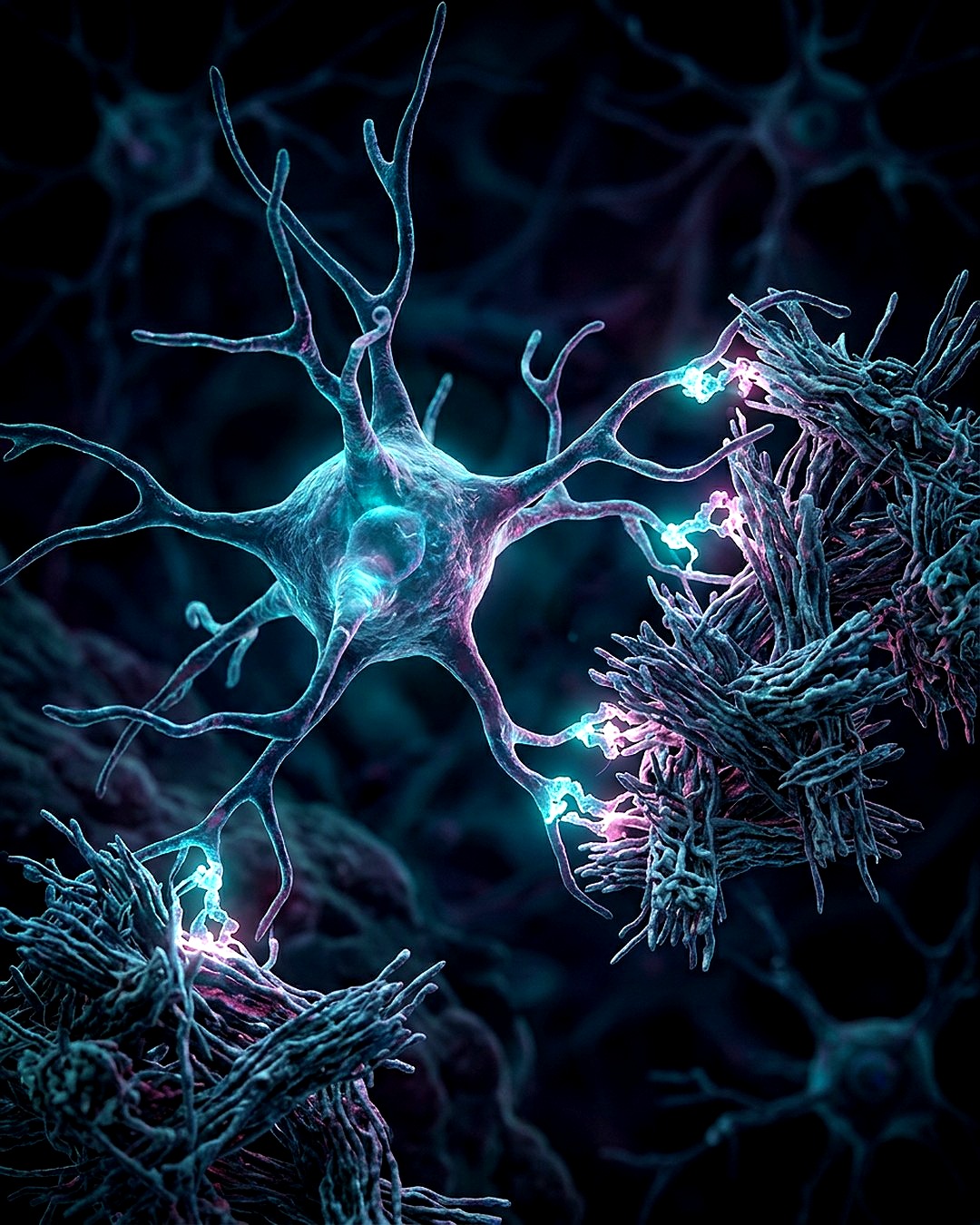
📊 Galectin-3 as a dual-action driver of pathology
Researchers at Lund University identified that the galectin-3 protein connects microglial inflammation with beta-amyloid plaque aggregation in Alzheimer disease. The protein operates both inside cellular lysosomes and outside cells where it binds with remarkable strength to long amyloid fibrils. Within lysosomes, it influences how amyloid material is processed and broken down by resident immune cells. Outside cells, galectin-3 interferes with the growth of protein fibers, reshaping plaques and directly contributing to surrounding nerve damage.