🧠 Galectin-3 in Alzheimer Disease

SciTechDaily AlzheimersDisease Neuroscience LundUniversity BetaAmyloid Microglia Galectin3

Resumen

Mind Map Cover Image
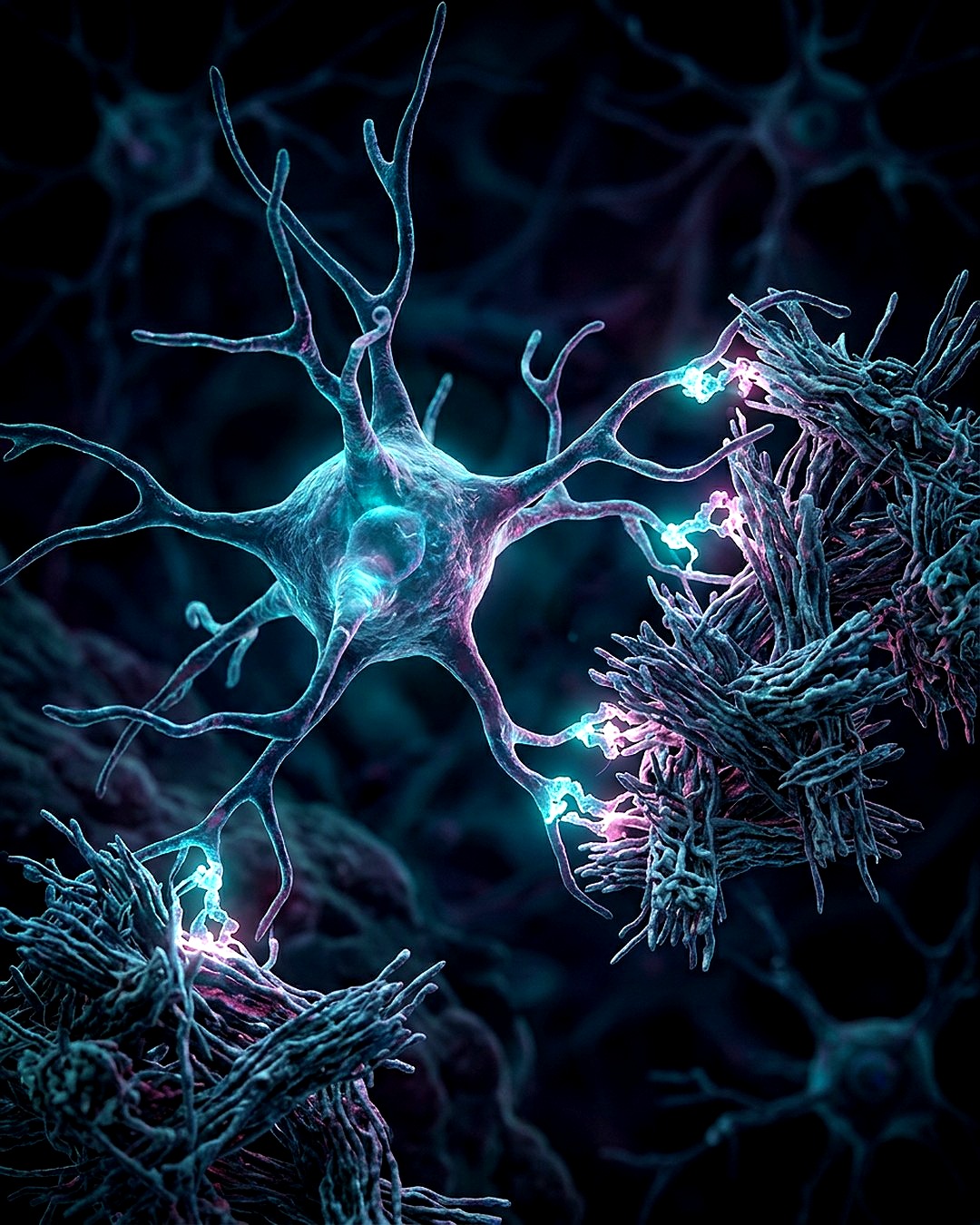
Imagen de Portada Generada por IA

Recent research from Lund University identifies the galectin-3 protein as a crucial link between microglial neuroinflammation and beta-amyloid accumulation in Alzheimer disease. The investigation demonstrates that this single protein alters the physical structure of amyloid plaques and directly influences the brain immune response, driving nerve damage. By focusing on galectin-3, the study reveals a potential therapeutic target that addresses brain inflammation alongside amyloid pathology. These findings offer a fresh direction for developing treatments that can fill current gaps in managing neurodegenerative decline. The researchers argue that current Alzheimer medications targeting amyloid alone are insufficient because they fail to reduce harmful brain inflammation. They emphasize that while antibody-based drugs have reached patients, their modest clinical efficacy highlights the urgent need to understand the brain immune response. Inactivation of galectin-3 provides a mechanism to shift immune cells from a damaging inflammatory state to a protective mode. This perspective positions galectin-3 as a promising anchor for future pharmacological interventions in neurodegeneration. The study combined experiments on mice with an Alzheimer-like condition and examinations of human brain tissue from nine individuals to establish both causal and correlational links. When investigators removed galectin-3 from the animal models, amyloid plaques became smaller and more tightly packed while surrounding nerve damage declined significantly. Furthermore, microglia transitioned from a harmful inflammatory role to expressing the protective receptor TREM2. Galectin-3 was shown to bind strongly to beta-amyloid strands, operating both inside cellular lysosomes and outside cells where it interferes with fibril growth. For researchers and clinicians, these insights point toward novel combination strategies that simultaneously clear amyloid deposits and suppress neuroinflammation. The practical momentum of this work is underscored by the recent U.S. regulatory approval of a Phase 2 clinical trial for an antibody blocking galectin-3. Translating these preclinical discoveries into human testing could eventually provide safer and more effective therapies for dementia patients. Practitioners and developers should monitor ongoing clinical trials targeting galectin-3 as a key benchmark for next-generation treatments.

Puntos clave

01

📊 Galectin-3 as a dual-action driver of pathology

Researchers at Lund University identified that the galectin-3 protein connects microglial inflammation with beta-amyloid plaque aggregation in Alzheimer disease. The protein operates both inside cellular lysosomes and outside cells where it binds with remarkable strength to long amyloid fibrils. Within lysosomes, it influences how amyloid material is processed and broken down by resident immune cells. Outside cells, galectin-3 interferes with the growth of protein fibers, reshaping plaques and directly contributing to surrounding nerve damage.

02

🎯 Effects of removing galectin-3 in mouse models

When investigators inactivated or removed galectin-3 from mice with an Alzheimer-like condition, amyloid plaques became notably smaller and more tightly packed. This structural alteration led to a significant decrease in damage inflicted upon surrounding nerve endings. Additionally, the intervention prompted microglia to transition away from a harmful inflammatory state. The cells instead adopted a protective role characterized by expression of the TREM2 receptor.

03

🏛️ Human tissue validation and study limitations

The study substantiated its experimental mouse findings by examining human brain tissue obtained from nine individuals, which revealed a strong correlation with the animal models. While the mouse experiments established a direct cause-and-effect relationship regarding nerve damage, human data remains correlational. The authors note that clinical trials will be necessary to determine whether pharmacological blocking of galectin-3 yields therapeutic benefits for human patients.

04

💡 Addressing the inflammation gap in Alzheimer therapy

Current Alzheimer medications that rely on antibodies to break down amyloid achieve only modest clinical effects because they fail to target brain inflammation. Galectin-3 offers an advantageous alternative because it is a protein that pharmacological drugs can successfully bind to. Targeting galectin-3 bridges the therapeutic gap by simultaneously addressing plaque accumulation and the damaging immune response of microglia.

05

⚡ Rapid translation toward clinical trials

The preclinical discoveries made by the Lund University group have rapidly advanced toward human testing alongside publication in the Proceedings of the National Academy of Sciences on November 18, 2026. Just weeks before the research was reported, U.S. regulators authorized a Phase 2 clinical trial for an antibody designed to block galectin-3. This milestone underscores the tangible clinical potential of targeting microglial neuroinflammation.

¿Quieres crear tu propio mapa mental?

¡Inicia sesión en Neumap AI y comienza a crear tus propios mapas mentales!

Comenzar