Stopping Aggressive Breast Cancer Metastasis

scitechdaily breast-cancer cancer-research genetics medical-breakthrough

Résumé

Image de couverture du mindmap
Image de Couverture Générée par IA

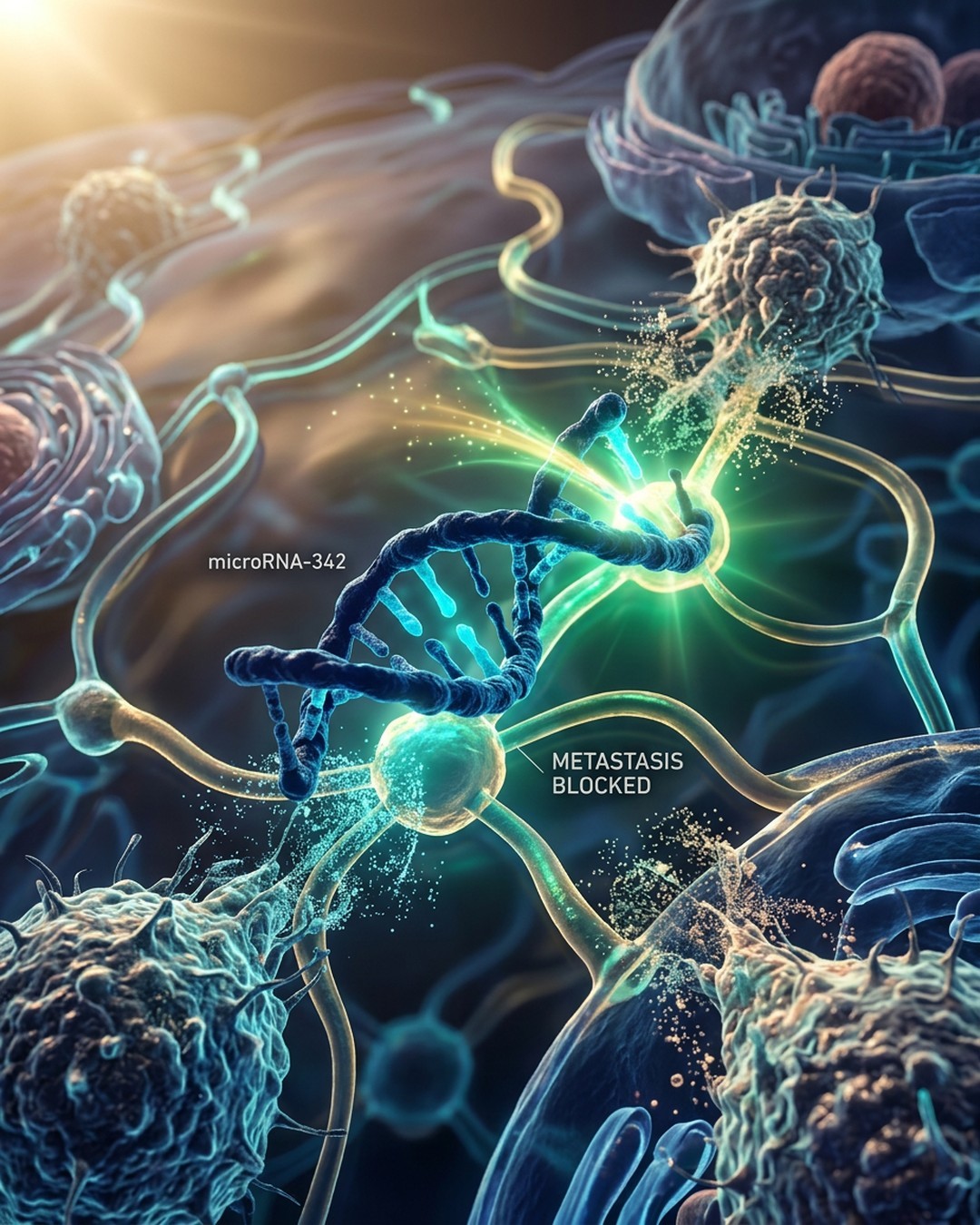
Australian researchers from Adelaide University and the Olivia Newton-John Cancer Research Institute published a study on August 21, 2026, in EMBO Molecular Medicine identifying a promising new approach to stop aggressive triple-negative breast cancer from spreading. The research demonstrates that restoring a naturally occurring molecule called miR-342 significantly reduces the metastasis of cancer cells to distant organs such as the lungs and bones in pre-clinical models. The authors emphasize that the primary danger of triple-negative breast cancer stems from its lack of common molecular targets like estrogen receptors, progesterone receptors, and HER2, making standard targeted therapies ineffective and metastasis life-threatening. The study found that low levels of miR-342 combined with high activity in the cancer-promoting E2F pathway mark patients at much higher risk for metastatic disease. The essence of the strategy involves repurposing an existing cancer drug called palbociclib, which is a CDK4/6 inhibitor normally used for advanced hormone receptor-positive breast cancer. When administered in models with low miR-342 levels, palbociclib successfully suppressed the growth of metastatic tumors by preventing microscopic deposits from developing into secondary cancers. This discovery provides a personalized treatment framework for the 10-15 percent of Australian breast cancer diagnoses categorized as triple-negative, opening the door for future clinical trials to improve patient survival rates and offer targeted therapeutic options after the cancer has spread.

Points clés

01

🔹 Triple-Negative Breast Cancer Challenge

【📌 Key Finding】Triple-negative breast cancer accounts for roughly 10 to 15 percent of Australia's approximately 21,000 annual breast cancer diagnoses and represents an aggressive subtype. 【🔸 Impact Factors】It lacks three common molecular targets including estrogen receptors, progesterone receptors, and HER2 proteins, making standard targeted therapies ineffective. 【⭐ Data Support】Most breast cancer deaths occur due to metastasis where cancer spreads to distant organs rather than from the primary tumor itself.

02

🔸 Role of miR-342 and E2F Pathway

【📌 Key Finding】Research published on August 21, 2026, in EMBO Molecular Medicine identified that low levels of naturally occurring molecule miR-342 combined with high E2F pathway activity indicate a high metastatic risk. 【🔸 Impact Factors】miR-342 acts as a master regulator for genes involved in cancer progression, and its depletion allows dormant cells to form secondary tumors. 【⭐ Data Support】Restoring miR-342 levels in pre-clinical models substantially reduced the spread of breast cancer to distant organs like lungs and bones.

03

⭐ Repurposing Palbociclib for Metastasis

【📌 Key Finding】Scientists tested palbociclib, a CDK4/6 inhibitor currently used for advanced hormone receptor-positive breast cancer, on models with low miR-342 levels. 【🔸 Impact Factors】The drug significantly reduced the growth of metastatic tumors and prevented microscopic metastatic deposits from expanding after cancer spread. 【⭐ Data Support】This discovery offers a method to repurpose existing therapies for patients with triple-negative disease who share this biological weakness.

04

📊 Research Leadership and Funding

【📌 Key Finding】The study was led by researchers from Adelaide University and the Olivia Newton-John Cancer Research Institute, with Associate Professor Philip Gregory and Professor Robin Anderson as co-senior authors. 【🔸 Impact Factors】The work provides a foundation for future clinical trials following confirmation in patient-derived pre-clinical models. 【⭐ Data Support】Funding for the study was provided by the National Breast Cancer Foundation and the National Health and Medical Research Council.

05

💡 Clinical Implications and Future Directions

【📌 Key Finding】Identifying miR-342 levels creates a personalized medicine approach for patients with triple-negative breast cancer. 【🔸 Impact Factors】Rather than shrinking the primary tumor, the treatment focuses on stopping tiny metastatic deposits from developing into life-threatening secondary cancers. 【⭐ Data Support】Researchers plan to confirm findings in patient-derived pre-clinical models before progressing to formal clinical trials.

Voulez-vous créer votre propre mindmap ?

Connectez-vous à Neumap AI et commencez à créer vos propres mindmaps !

Commencer