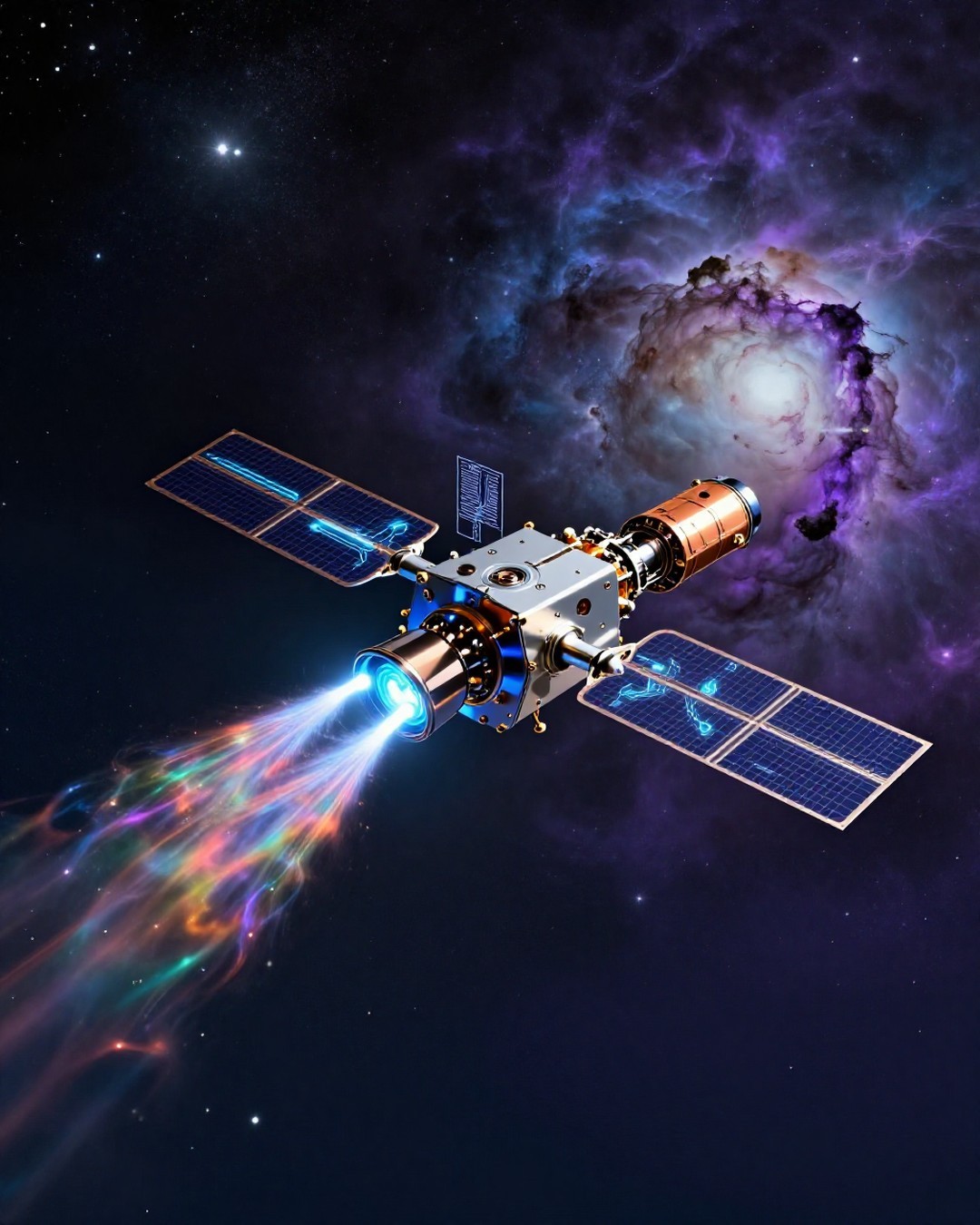
MIT Dual-Mode Rocket System for Small Satellites

MIT AerospaceEngineering SpacePropulsion CubeSat NASA DeepSpaceExploration

要約

マインドマップカバー画像
AI生成カバー画像

Researchers at MIT have developed a dual-mode rocket propulsion system that integrates chemical and electric thrusters into a single, compact unit. By utilizing a shared propellant, specifically the Advanced SpaceCraft Energetic Non-Toxic (ASCENT) ionic liquid, this technology allows small satellites to perform both high-thrust maneuvers and efficient long-distance travel, significantly enhancing their operational flexibility for deep-space missions. The primary objective of this innovation is to overcome the size and weight constraints inherent in CubeSats, which are typically limited by their small form factor. By eliminating the need for separate fuel tanks and propulsion systems, the MIT team aims to enable cost-effective, high-capability exploration of destinations like Mars or the asteroid belt, while also improving mission performance for Earth-based applications such as weather and climate monitoring. The system leverages electrospray thrusters, which are thumbnail-sized devices that use electric fields to accelerate ions from a liquid propellant. The successful testing of ASCENT as a dual-purpose fuel demonstrates that this environmentally friendly, non-toxic propellant can provide performance comparable to traditional ionic liquids while supporting the dual-mode functionality required for complex space maneuvers. This technology is scheduled for its first in-space demonstration in November 2026 via NASA's Green Propulsion Dual Mode mission. The successful deployment of this system will provide a scalable, flexible, and affordable platform for future interplanetary exploration, allowing small satellites to adapt their propulsion strategy based on specific mission requirements.

キーポイント

01

🔹 Dual-Mode Propulsion Innovation

MIT researchers have engineered a propulsion system that combines chemical and electric thrusters into one package. This design uses a single propellant tank to power both systems, saving critical space on small satellites (CubeSats) and enabling them to perform both rapid maneuvers and long-duration, fuel-efficient travel.

02

🔸 ASCENT Propellant Utilization

The system utilizes Advanced SpaceCraft Energetic Non-Toxic (ASCENT) propellant, an ionic liquid originally developed by the U.S. Air Force as a safer, non-toxic alternative to hydrazine. Testing confirmed that ASCENT effectively powers electrospray thrusters, providing performance metrics comparable to existing ionic liquid propellants.

03

⭐ Electrospray Thruster Mechanism

Electrospray thrusters are miniature devices, roughly the size of a dime, that use electrical voltage to charge ions within an ionic liquid. These charged particles are then expelled through tiny emitters to generate thrust. This method is highly efficient for slow, precise maneuvers required for deep-space navigation.

04

📊 Mission Objectives and Testing

The technology is set for its first in-space demonstration in November 2026 through NASA's Green Propulsion Dual Mode mission. The mission will utilize a briefcase-sized CubeSat equipped with one chemical thruster and four electrospray thrusters, all drawing from a shared fuel reservoir to validate the dual-mode concept.

05

💡 Strategic Advantages for Small Satellites

By integrating two propulsion modes, small satellites gain the flexibility to adjust their speed and trajectory dynamically. This capability is essential for missions to Mars or the asteroid belt, as well as for Earth-observation tasks where satellites may need to quickly reposition to monitor evolving weather events or climate phenomena.

自分のマインドマップを作成したいですか?

Neumap AIにログインして、あなた専用のマインドマップの作成を始めましょう!

今すぐ始める