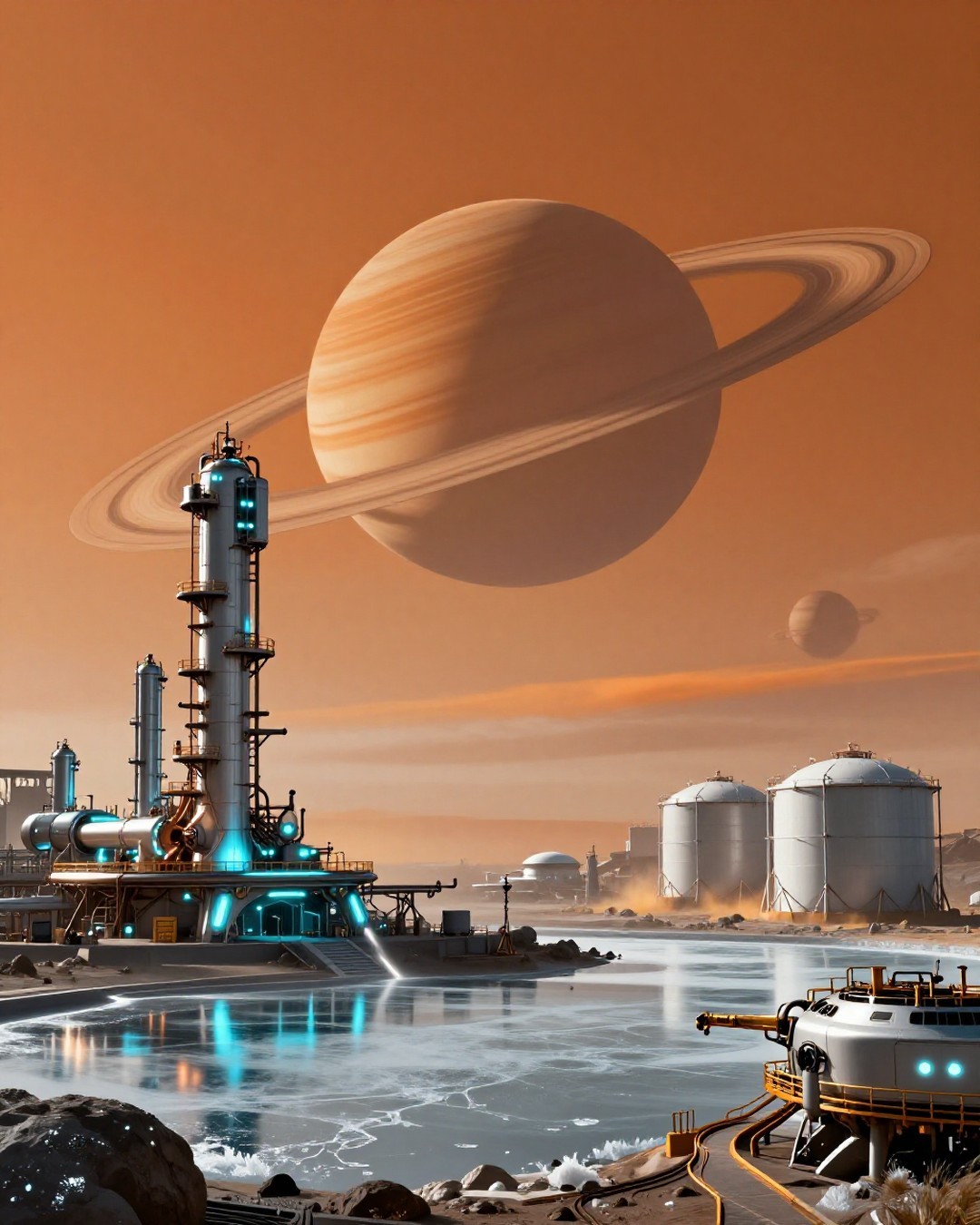
Titan, Saturn's largest moon, is identified as a prime candidate for future deep space colonization due to its unique abundance of essential resources. A NASA-supported study published in June 2026 highlights that Titan possesses a dense, nitrogen-rich atmosphere and vast hydrocarbon reserves, including methane, ethane, and propane, which can be utilized for fuel, plastics, and chemical feedstocks.
The research team, led by Conor A. Nixon, argues that Titan serves as a strategic 'Persian Gulf' of the Solar System. Unlike the Moon or Mars, Titan offers a self-sustaining environment where in-situ resource utilization (ISRU) could support long-term human settlements, manufacturing, and refueling depots for missions traveling to the outer Solar System.
Beyond hydrocarbons, Titan's composition is approximately 50% water, which can be harvested for drinking water, oxygen, and hydrogen propellant. While the moon's distance necessitates advanced nuclear propulsion for transit, its resource profile is considered unrivaled for enabling humanity to become a truly interplanetary civilization.
For researchers and space agencies, this study provides a roadmap for future exploration, emphasizing that Titan is not just a scientific curiosity but a critical hub for future space infrastructure. Practical applications include developing technologies for hydrocarbon refining and establishing orbital refueling stations to facilitate deep space travel.