Coacervates: The Liquid Droplets Explaining Life's Origins

biophysics origins-of-life cell-biology biomolecular-condensates evolutionary-science

Samenvatting

Mindmap Omslagafbeelding
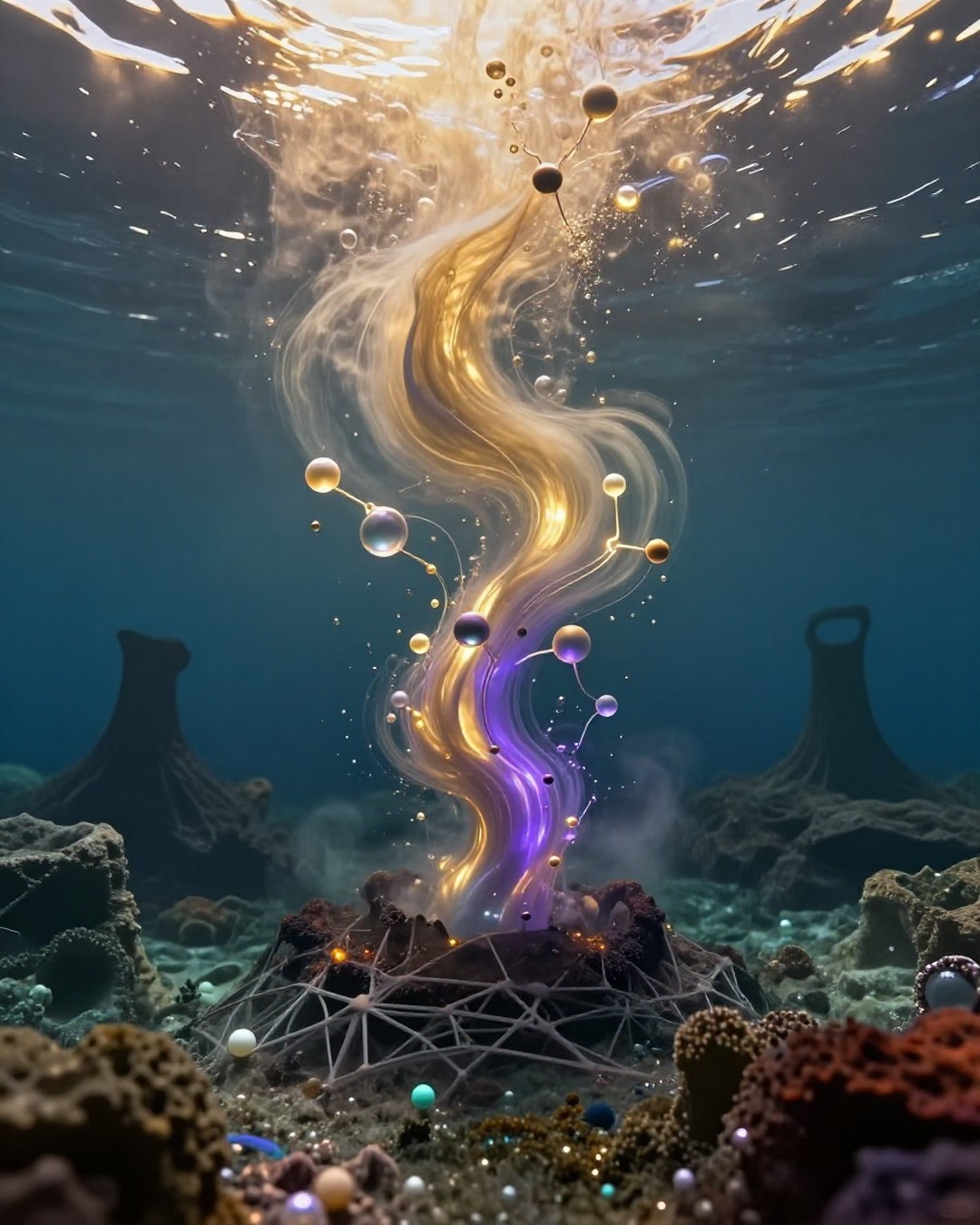
AI Gegenereerde Omslagafbeelding

Coacervates, also known as biomolecular condensates, are liquid-like droplets found within cells that perform essential biological functions. Discovered in 2009, these structures are now recognized as critical components of cellular organization, with malfunctions linked to diseases such as Alzheimer's and heart tissue deterioration during transplants. Recent research suggests these droplets may be the missing link in understanding the origins of life, acting as primitive, self-assembling compartments that facilitated early chemical reactions. The author highlights a significant shift in scientific perspective, moving from viewing coacervates as historical curiosities to recognizing them as active participants in life's emergence. By providing a concentrated internal environment, these droplets allowed simple prebiotic molecules to interact, accelerate metabolic reactions, and potentially store genetic information, effectively bridging the gap between non-living chemical soups and complex biological organisms. The essence of this discovery lies in the structural simplicity and spontaneous formation of coacervates. Unlike complex lipid-membrane cells, coacervates form through liquid-liquid phase separation, a process that requires minimal energy and simple building blocks. This makes them highly plausible candidates for the first 'protocells' on early Earth, capable of growth, division, and chemical complexity without the need for sophisticated genetic machinery. For researchers and students, this field offers a unified framework to study the origins of life, integrating metabolism, compartmentalization, and genetics. Practical applications include developing synthetic cells for drug delivery, understanding neurodegenerative disease mechanisms, and refining organ preservation techniques by controlling condensate formation.

Belangrijke punten

01

🔹 Definition and Biological Role

【📌 Definition】Coacervates (biomolecular condensates) are liquid-like droplets formed through phase separation of proteins, lipids, or nucleic acids. 【🔸 Function】They act as non-membrane-bound compartments within cells, concentrating molecules to facilitate essential processes like ribosome production in the nucleolus. 【⭐ Clinical Impact】Malfunctioning condensates are linked to Alzheimer's disease (amyloid/tau plaque formation) and inflammation in donor hearts during preservation.

02

🔸 Historical Context and Oparin's Theory

【📌 Origin】In the 1930s, Alexander Oparin proposed that coacervates were the precursors to the first cells in the 'primordial soup'. 【🔸 Decline】The theory lost favor as molecular biology focused on DNA/RNA and lipid-bound vesicles. 【⭐ Resurgence】The 2009 discovery of P granules by Anthony Hyman confirmed that these liquid droplets are ubiquitous and functional in modern cells, validating Oparin's early conceptual work.

03

⭐ Prebiotic Chemistry and Self-Assembly

【📌 Spontaneous Formation】Unlike lipid vesicles, coacervates form easily from simple carbon-based molecules. 【🔸 Research Breakthroughs】In 2021, Evan Spruijt demonstrated that short peptides (four amino acids long) can self-assemble into coacervates. 【⭐ Chemical Complexity】These droplets concentrate reactants, allowing reactions like the transformation of NAD+ to NADH to occur up to three times faster than in a fully mixed solution.

04

📊 Lifelike Behaviors: Growth and Division

【📌 Dynamic Systems】Researchers have successfully engineered synthetic coacervates that exhibit lifelike properties. 【🔸 Experimental Success】Job Boekhoven's team used chemical fuel (EDC) to induce growth and division in RNA-protein droplets. 【⭐ Environmental Factors】Heated rock pores, common on early Earth, have been shown to provide the physical environment necessary for these droplets to divide, mimicking primitive cellular reproduction.

05

💡 Future Implications for Origins of Life

【📌 Unified Theory】Coacervates provide a framework to integrate metabolism, compartmentalization, and genetics, resolving long-standing 'chicken-or-egg' debates in evolutionary biology. 【🔸 Current Challenges】Future research aims to determine systematic rules for molecular partitioning and to achieve true self-sustaining genetic replication within these droplets. 【⭐ Strategic Value】Understanding these structures simplifies the study of life's origins by focusing on spontaneous, low-energy physical processes.

Wilt u uw eigen mindmap maken?

Log in op Neumap AI en begin met het maken van uw eigen mindmaps!

Aan de Slag