Safe Exercise Strategies in Hot Weather

BBC Health ClimateChange Fitness Heatwave ExerciseSafety

Samenvatting

Mindmap Omslagafbeelding
AI Gegenereerde Omslagafbeelding

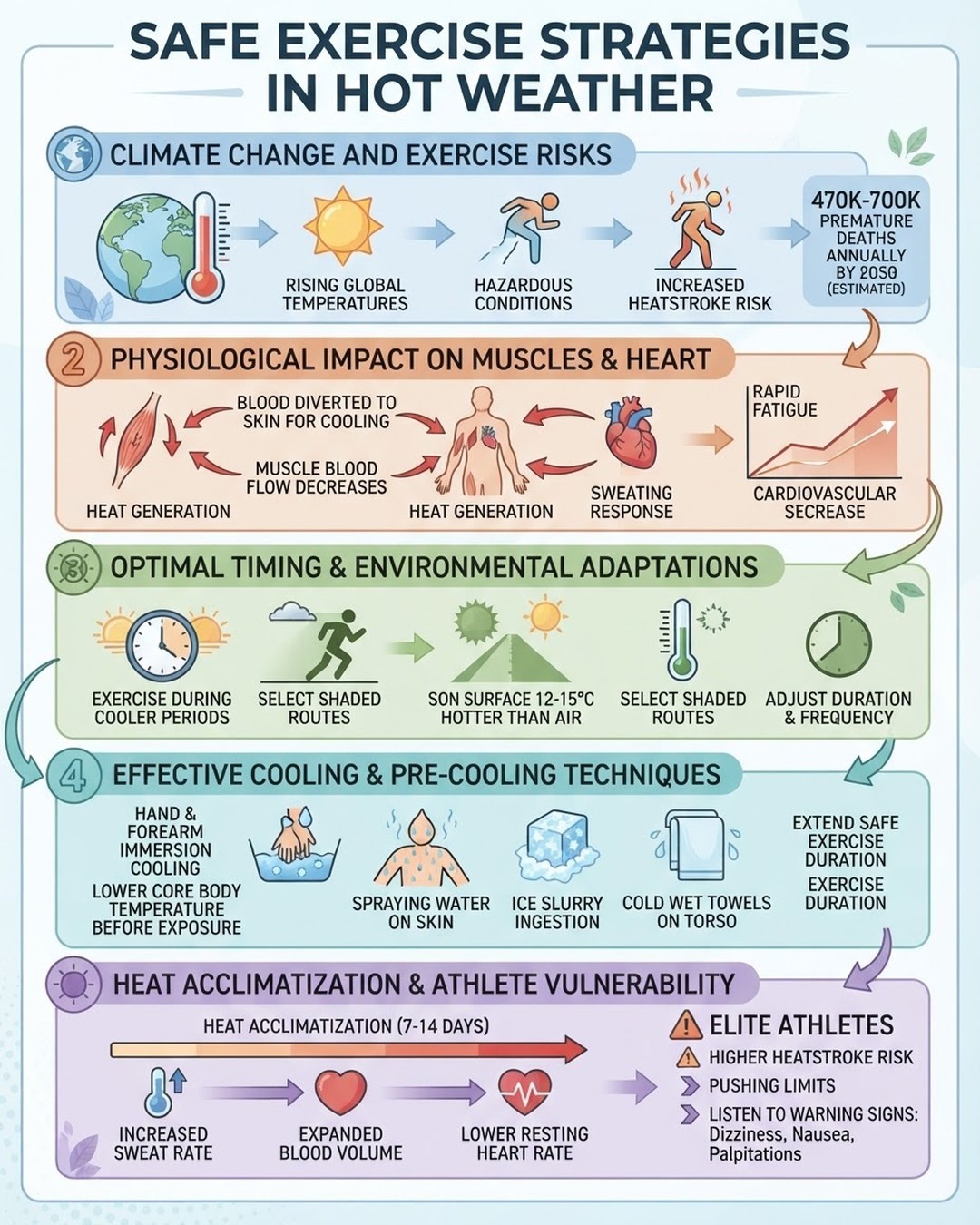
Soaring global temperatures driven by climate change and El Nino weather patterns pose significant long-term health risks by discouraging outdoor exercise and physical activity, potentially leading to an estimated 470,000 to 700,000 premature deaths per year by 2050. Researchers highlight that exercising in extreme heat forces the body to divert blood flow from working muscles to the skin for cooling, causing rapid fatigue, decreased oxygen delivery, and increased cardiovascular strain. Experts recommend strategic lifestyle and fitness adjustments to maintain physical activity safely during heatwaves, such as scheduling workouts during cooler morning or evening hours, seeking shaded areas where temperatures can be up to 12 to 15 degrees Celsius lower, and accounting for humidity and wind speed factors. Additionally, reducing exercise duration, incorporating frequent rest breaks, and utilizing indoor air-conditioned environments help mitigate thermal stress and prevent heat-related illnesses like heatstroke. Effective physiological cooling methods include immersion cooling by submerging hands and forearms in cold water, applying wet towels or water to the skin surface to mimic natural sweat evaporation, pre-cooling the body with ice slurries before outdoor exposure, and gradually building heat acclimatization over a seven to 14-day period. Elite athletes face heightened risks of heatstroke due to pushing past biological limits, making self-monitoring and pacing crucial defenses against heat exhaustion and related symptoms. Ultimately, researchers emphasize that physical activity must be integrated with climate adaptation strategies, requiring individuals to modify not only whether they move, but when, where, and how they exercise. Recognizing early warning signs of heat illness such as dizziness, nausea, and palpitations is essential for taking immediate corrective action and safeguarding long-term health and wellbeing.

Belangrijke punten

01

🔹 Climate Change and Exercise Risks

Rising global temperatures driven by climate change and powerful El Nino weather patterns create hazardous conditions for outdoor physical activity. Environmental lifestyle epidemiologist Christian Garcia-Witulski warns that reduced physical activity in the heat could result in 470,000 to 700,000 premature deaths per year globally by 2050. High heat and humidity make daily commuting, walking, and exercising physically demanding, increasing thermal strain and the risk of dangerous heatstroke.

02

🔸 Physiological Impact of Heat on Muscles and Heart

During exercise in hot conditions, muscles generate heat, prompting the body to cool itself by sweating and diverting blood flow toward the skin. According to Ollie Jay from the University of Sydney, this creates a trade-off where the skin robs blood from muscles, reducing oxygen delivery and causing rapid fatigue. This dual demand places severe strain on the heart as it struggles to maintain adequate cardiac output and regulate internal body temperature simultaneously.

03

⭐ Optimal Timing and Environmental Adaptations

The single most impactful adjustment is exercising during cooler periods such as early mornings or evenings. Selecting shaded exercise routes can reduce ambient exposure significantly, as direct sunlight can make surfaces 12-15 degrees Celsius (22-27F) hotter than shaded air. Furthermore, humidity blunts sweat evaporation efficiency, and low wind speed in enclosed spaces increases heat stress, necessitating shorter workout durations and more frequent breaks.

04

📊 Effective Cooling and Pre-Cooling Techniques

Traditional ice packs offer low cooling rates due to limited skin coverage, whereas immersion cooling of hands and forearms in cold water is significantly more effective. Applying water to the skin surface replicates sweat evaporation without internal dehydration. Pre-cooling strategies, including consuming ice slurries and utilizing rotated cold wet towels on the torso, lower core body temperature before exposure, extending safe exercise duration.

05

💡 Heat Acclimatization and Elite Athlete Vulnerability

Kinesiologist Rebecca Stearns explains that heat acclimatization through 7 to 14 days of regular exercise lowers resting core temperature, increases sweat rates, and expands blood plasma volume. However, this adaptation is transient and disappears if heat exposure ceases. Elite athletes face higher heatstroke risks because they push past biological limits, making active pacing and listening to warning signs like dizziness, nausea, and palpitations essential defenses.

Wilt u uw eigen mindmap maken?

Log in op Neumap AI en begin met het maken van uw eigen mindmaps!

Aan de Slag