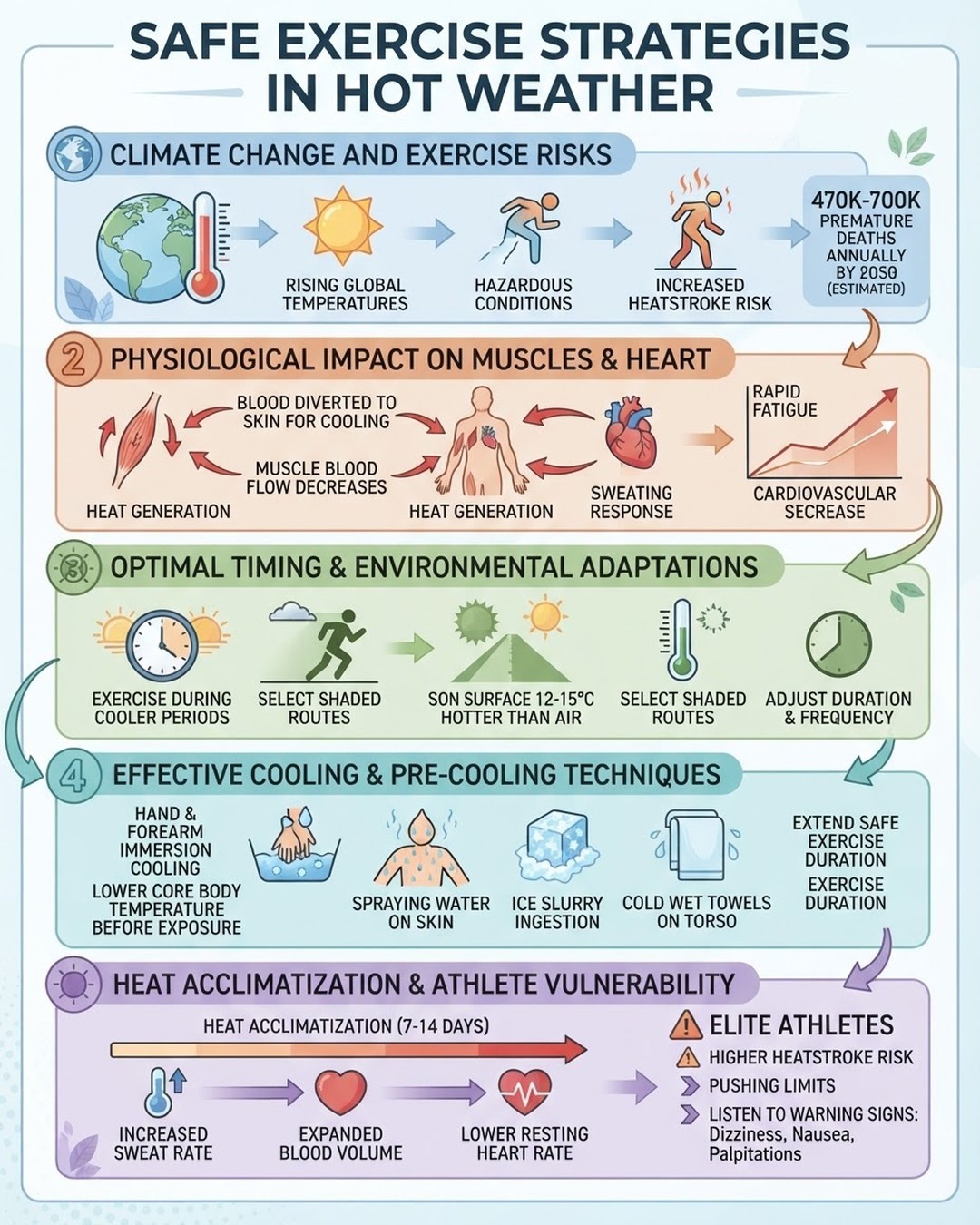
Soaring global temperatures driven by climate change and El Nino weather patterns pose significant long-term health risks by discouraging outdoor exercise and physical activity, potentially leading to an estimated 470,000 to 700,000 premature deaths per year by 2050. Researchers highlight that exercising in extreme heat forces the body to divert blood flow from working muscles to the skin for cooling, causing rapid fatigue, decreased oxygen delivery, and increased cardiovascular strain.
Experts recommend strategic lifestyle and fitness adjustments to maintain physical activity safely during heatwaves, such as scheduling workouts during cooler morning or evening hours, seeking shaded areas where temperatures can be up to 12 to 15 degrees Celsius lower, and accounting for humidity and wind speed factors. Additionally, reducing exercise duration, incorporating frequent rest breaks, and utilizing indoor air-conditioned environments help mitigate thermal stress and prevent heat-related illnesses like heatstroke.
Effective physiological cooling methods include immersion cooling by submerging hands and forearms in cold water, applying wet towels or water to the skin surface to mimic natural sweat evaporation, pre-cooling the body with ice slurries before outdoor exposure, and gradually building heat acclimatization over a seven to 14-day period. Elite athletes face heightened risks of heatstroke due to pushing past biological limits, making self-monitoring and pacing crucial defenses against heat exhaustion and related symptoms.
Ultimately, researchers emphasize that physical activity must be integrated with climate adaptation strategies, requiring individuals to modify not only whether they move, but when, where, and how they exercise. Recognizing early warning signs of heat illness such as dizziness, nausea, and palpitations is essential for taking immediate corrective action and safeguarding long-term health and wellbeing.