
📖 Introduction & Research Background
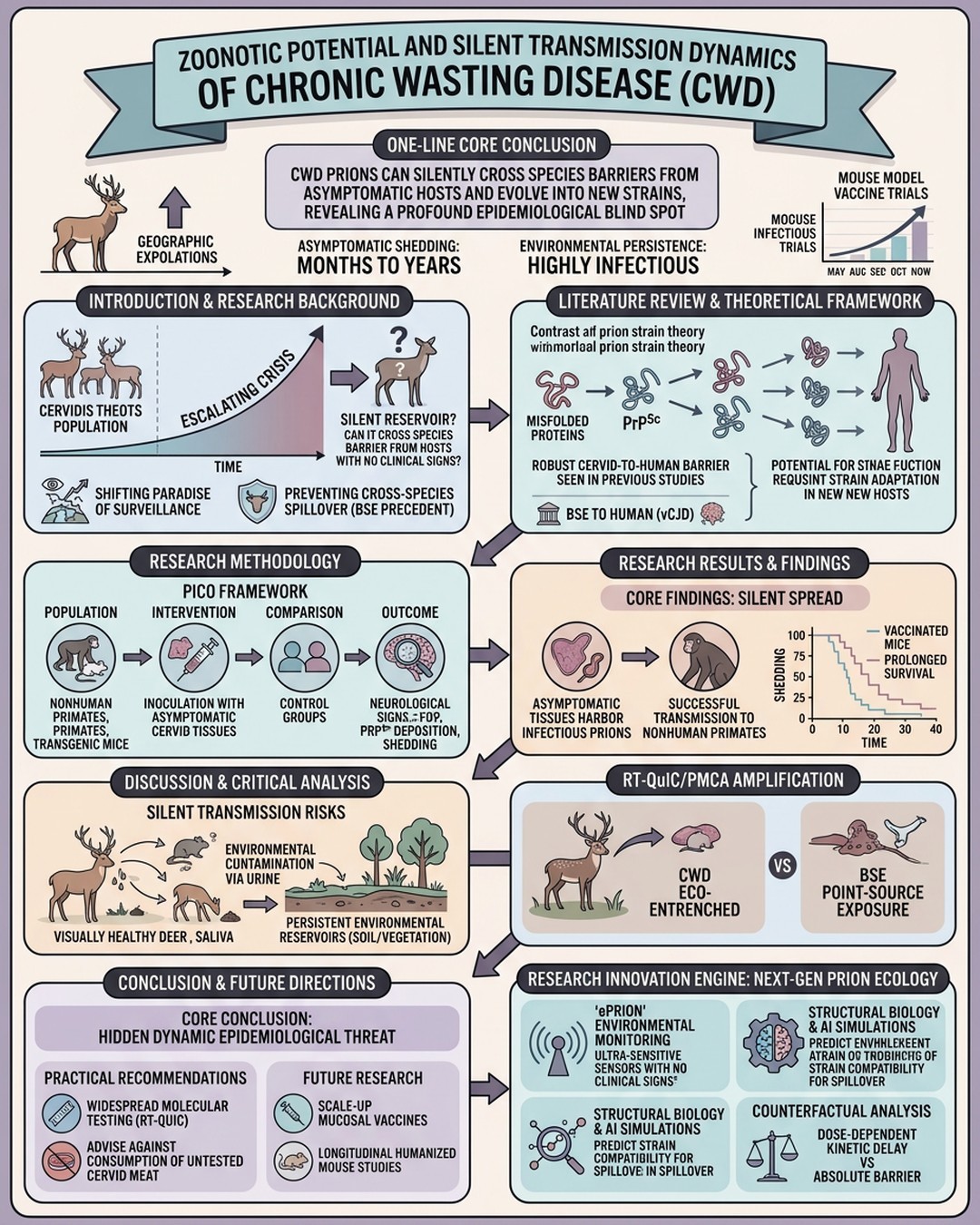
【Research Motivation】 The relentless geographic expansion of Chronic Wasting Disease (CWD) across North American cervid populations presents an escalating ecological and potential public health crisis. Understanding the true transmission dynamics is critical. 【Problem Statement】 Traditional epidemiological models assume disease transmission correlates heavily with clinical symptomatology. The core question is whether CWD prions can cross species barriers from hosts that exhibit absolutely no clinical signs of the disease, thereby creating a 'silent' reservoir of infection. 【Research Purpose】 The study aims to empirically test the zoonotic potential of CWD under controlled laboratory conditions, specifically evaluating the transmissibility of prions from asymptomatic carriers to nonhuman primate models. 【Research Value】 By demonstrating that low levels of prions in asymptomatic tissues can successfully infect recipient species and induce CWD-like symptoms, this research fundamentally shifts the paradigm of TSE surveillance. It highlights that environmental contamination (soil and vegetation) via urine and feces occurs long before visual detection, necessitating advanced molecular diagnostics and proactive mitigation strategies to prevent a potential cross-species spillover akin to the historical Bovine Spongiform Encephalopathy (BSE) crisis.