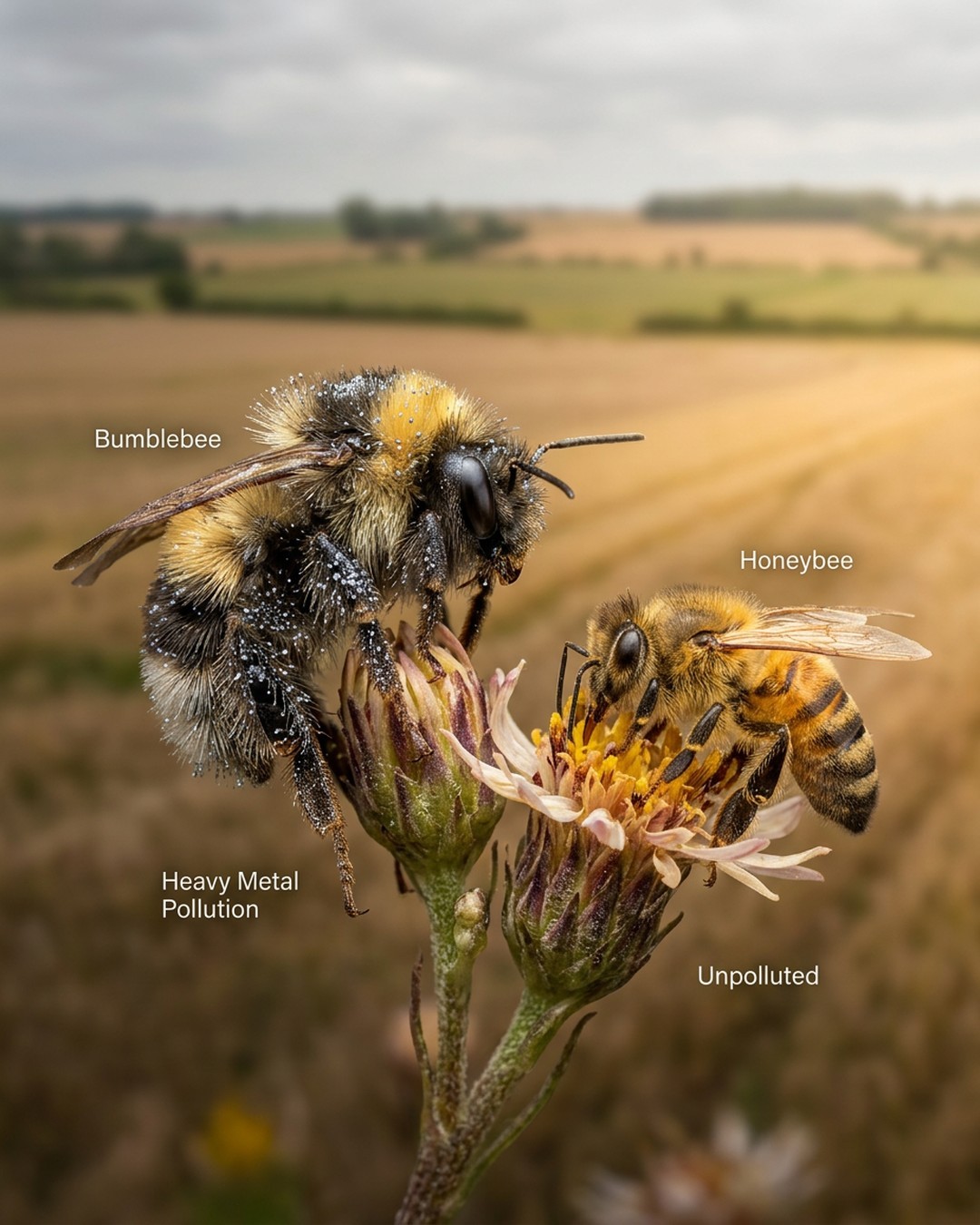
Recent research published on September 17, 2026, by a University of Cambridge team in the journal Ecological Entomology reveals that bumblebees accumulate significantly higher concentrations of toxic heavy metals in their pollen and bodies than honeybees sharing the exact same rural landscapes in Cambridgeshire.
The study investigated arsenic, cadmium, chromium, cobalt, lead, and tin, discovering that bumblebee pollen contained toxic metal concentrations between two and seven times those found in honeybee pollen, while bumblebee bodies carried roughly three times the concentration, demonstrating that honeybees are unreliable indicators of heavy metal exposure for other wild bee species.
The disparity in metal accumulation stems from fundamental differences in foraging behavior, biology, and nesting habits, as honeybees travel up to 10 kilometers and diversify their floral sources, whereas bumblebees stay within 1.5 kilometers and collect from fewer local plants, making them more vulnerable to localized contamination from sewage sludge, agrochemicals, and fertilizers.
Although metal levels are typically insufficient to cause immediate death, even low concentrations can impair learning, memory, navigation, foraging efficiency, and reproductive success, which poses a severe threat given that bumblebee colonies contain only 50 to 500 workers compared to honeybee colonies of 30,000 to 60,000 individuals.